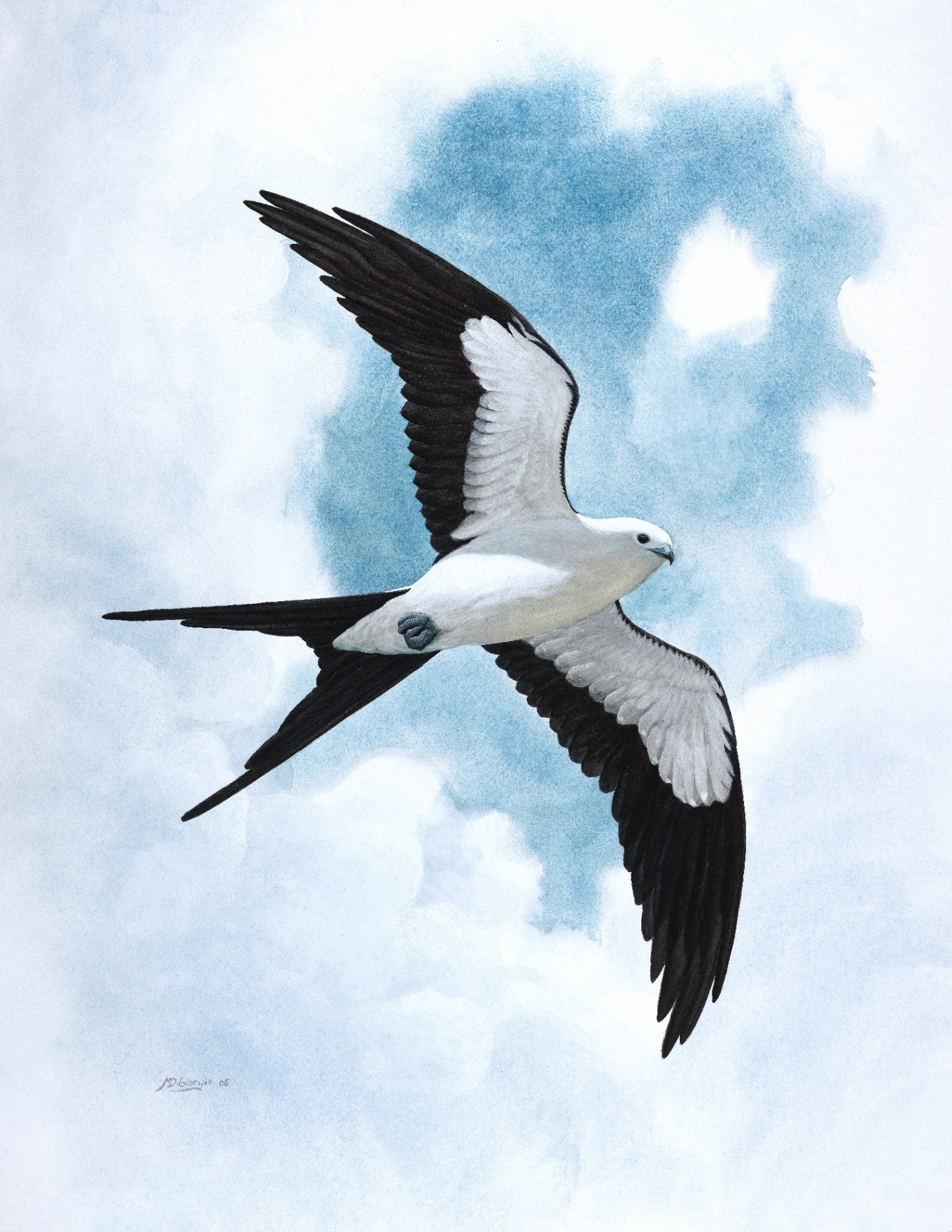
The Americas
A continental portrait of birdlife
The Western Hemisphere forms a continuous sweep of landscapes, from the Patagonian steppe to the Arctic tundra, and its birdlife follows that same geography.
Each region presented here is represented by works in the collection, creating a visual journey through the habitats and birdlife that give Winged Jewels of the Americas its continental scope.
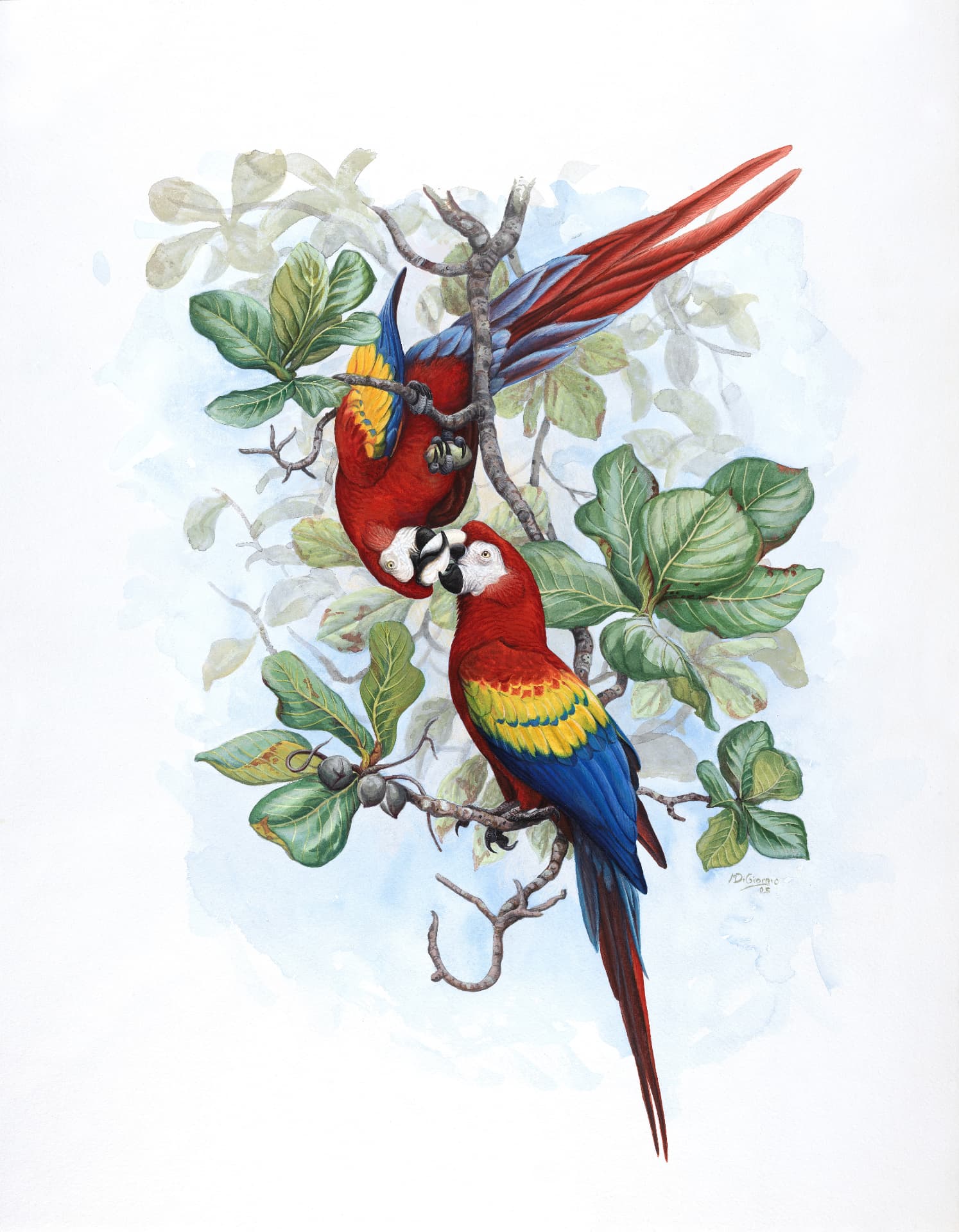
Amazonian forest
Equatorial lowlands
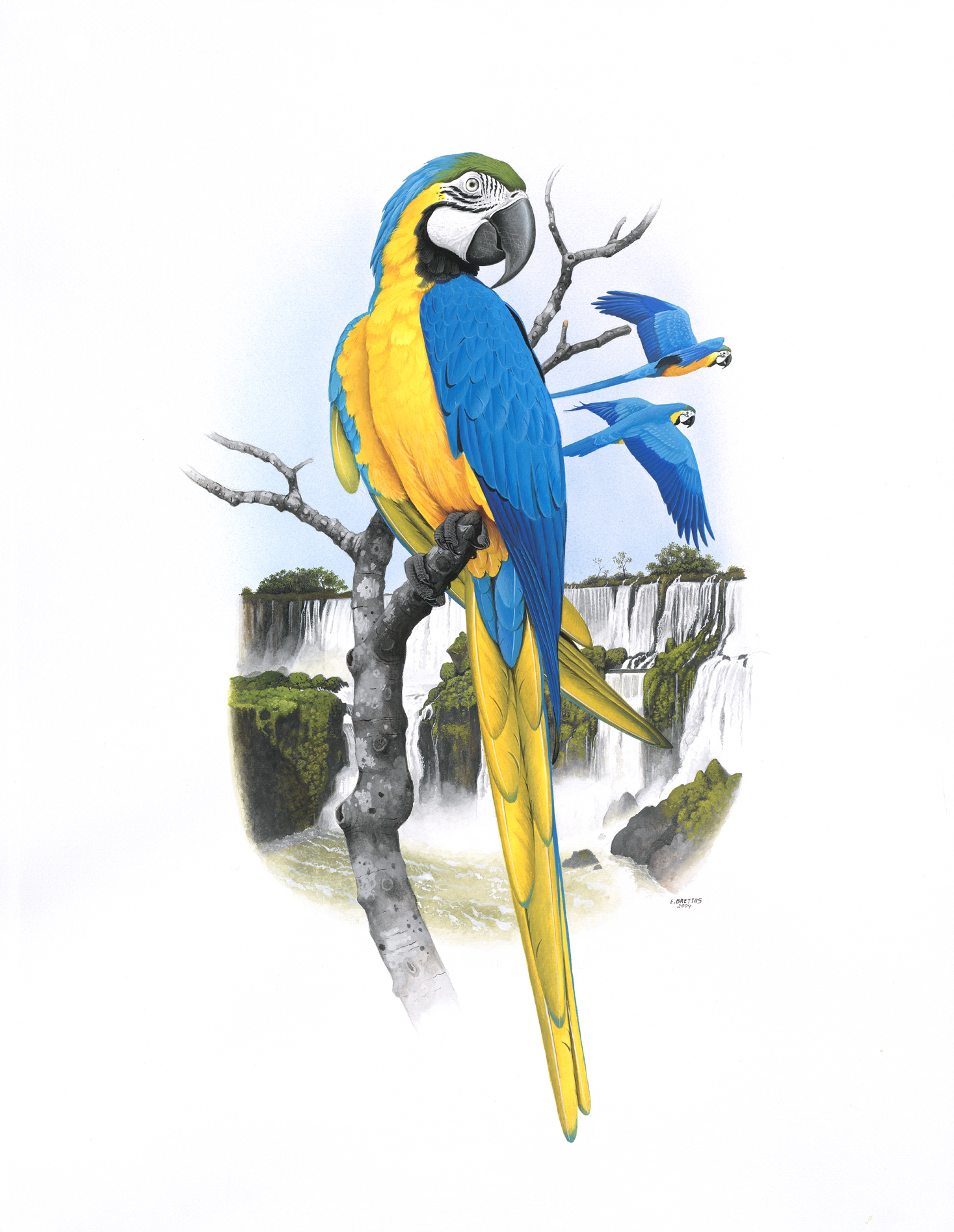
The great lowland basin holds the highest concentration of species in the collection, canopy macaws and parrots, aracaris, motmots and trogons, and the raptors that hunt above an unbroken roof of leaves.
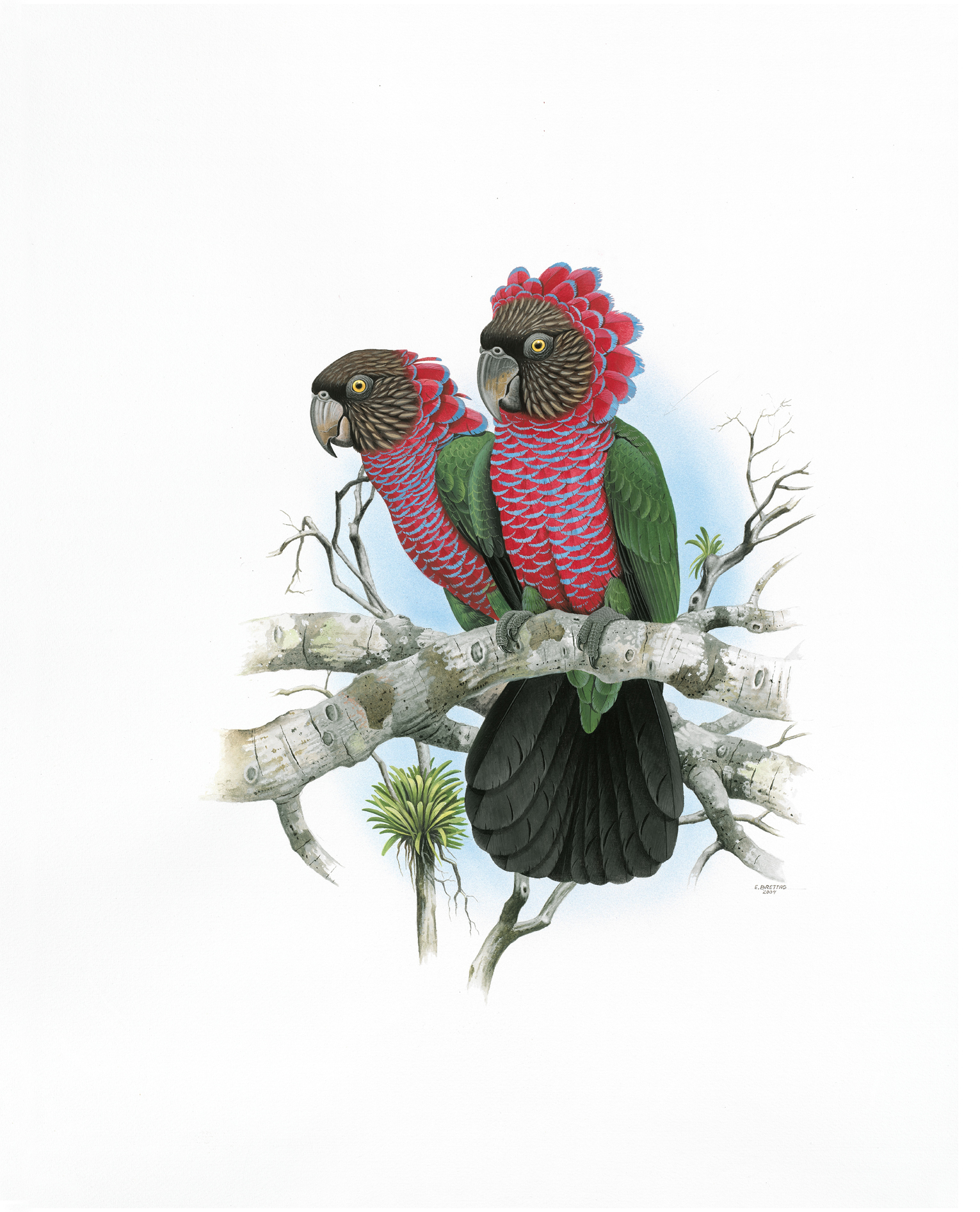
Red-fan ParrotDeroptyus accipitrinusEduardo Brettas · 200423.4 × 16.5 in · 59.4 × 42.0 cm 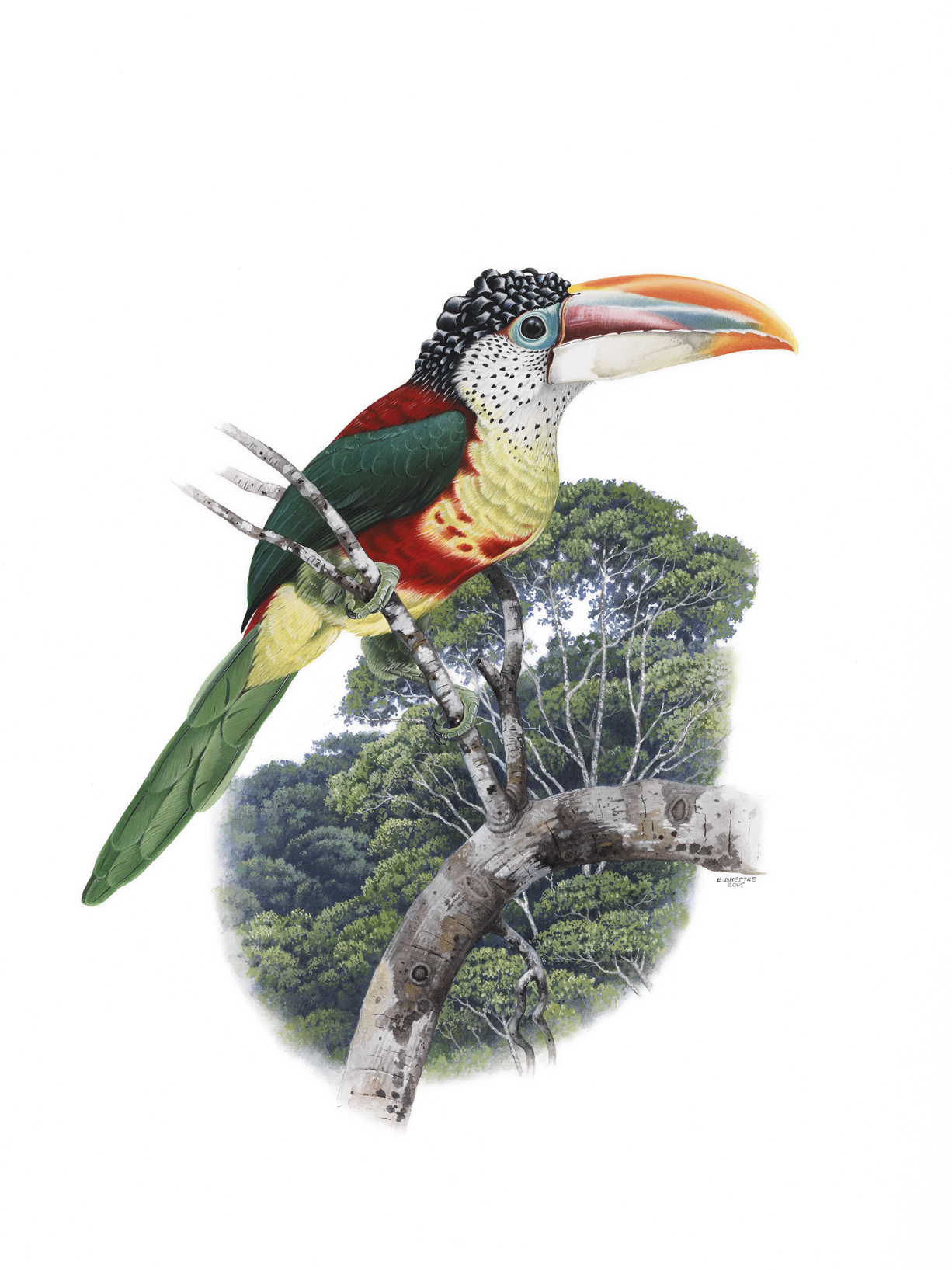
Curl-crested AracariPteroglossus beauharnaesiiEduardo Brettas · 200523.4 × 16.5 in · 59.4 × 42.0 cm 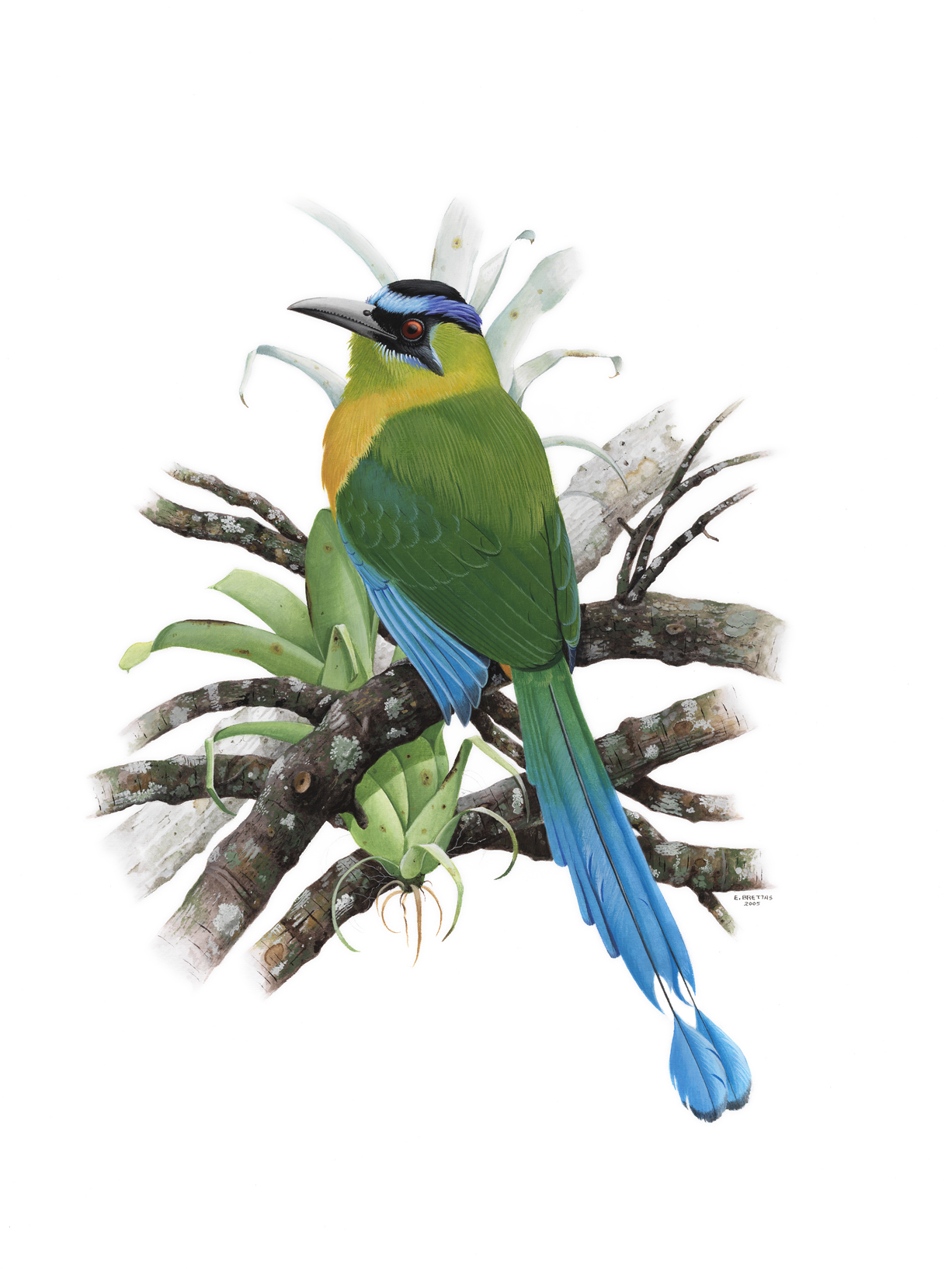
Amazonian MotmotMomotus momotaEduardo Brettas · 200523.4 × 16.5 in · 59.4 × 42.0 cm 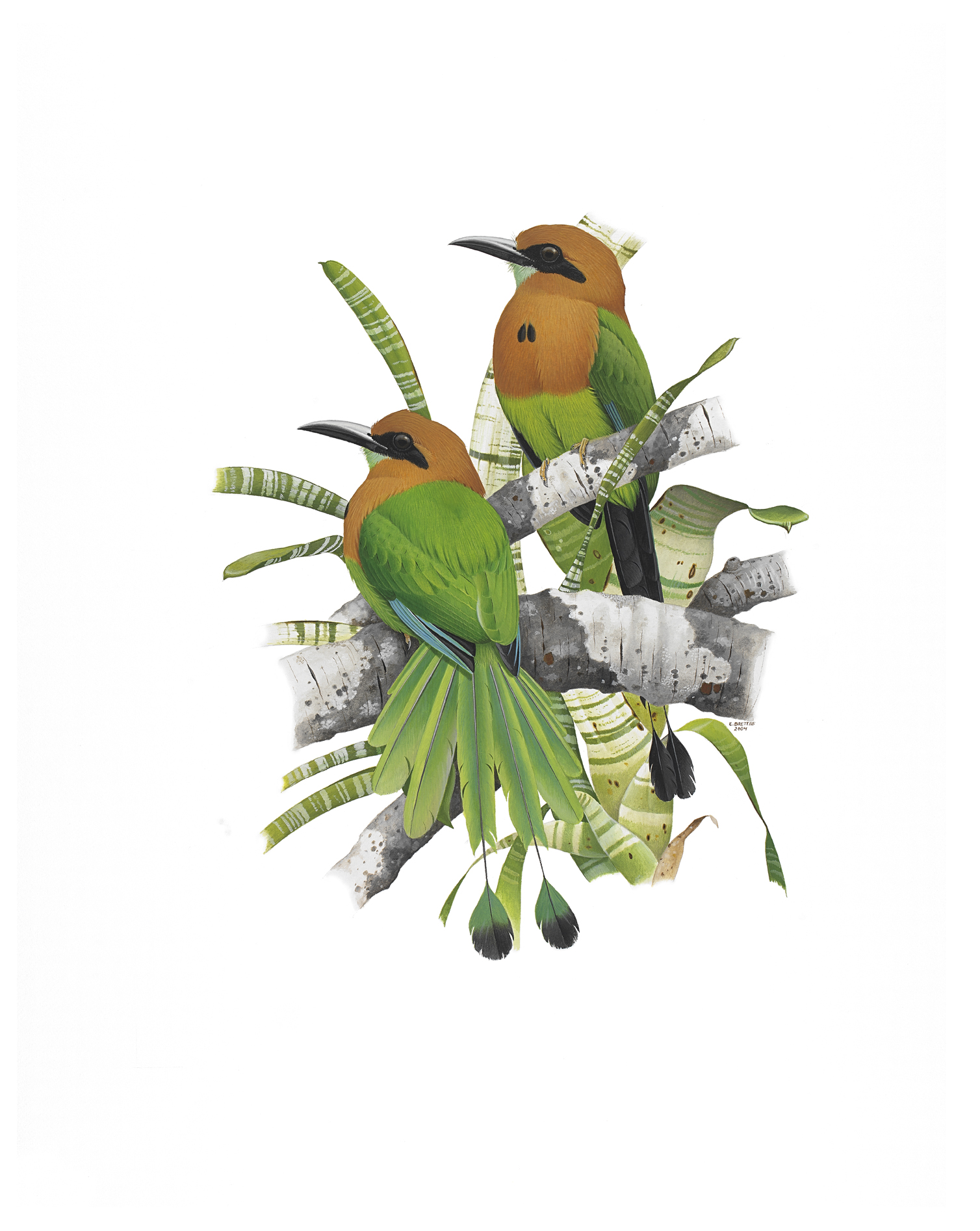
Broad-billed MotmotElectron platyrhynchumEduardo Brettas · 200423.4 × 16.5 in · 59.4 × 42.0 cm
Atlantic forest and dry interior
Tropical east and interior
East of the basin lies a separate forest system, fragmented and distinct, bordered by seasonally dry woodland and open country. Several plates belong to this eastern lineage of habitats and to the arid caatinga beyond it.
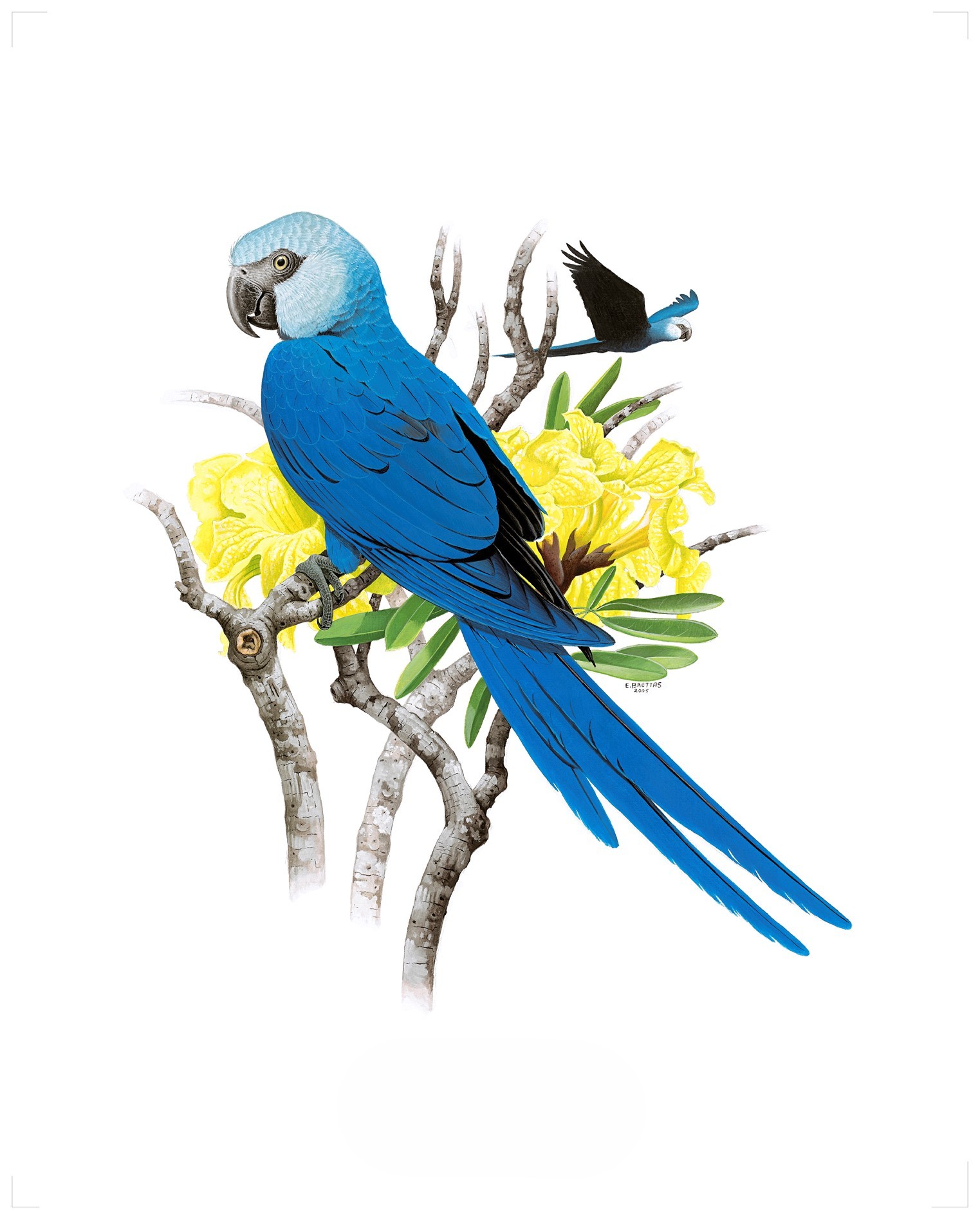
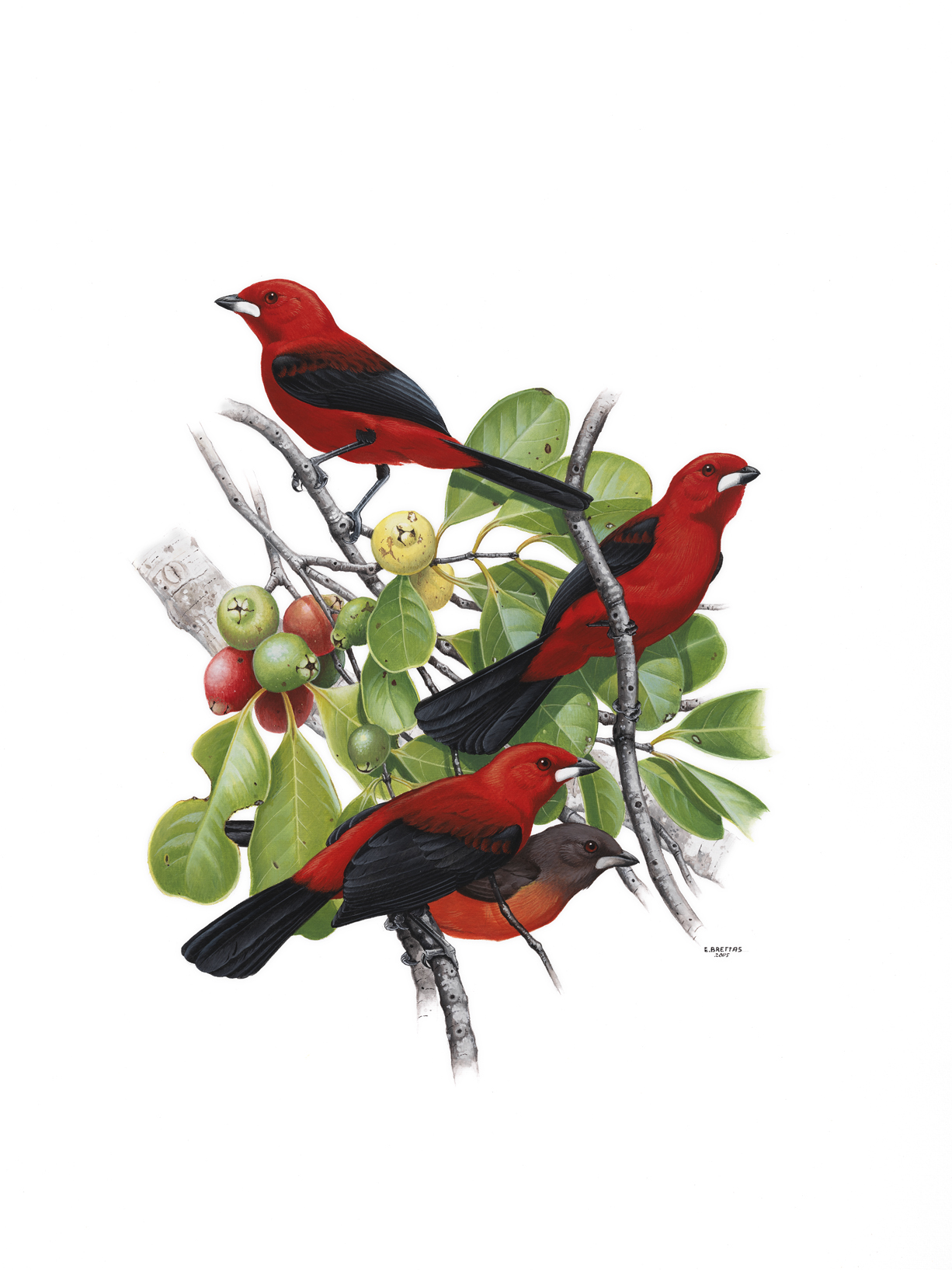
Brazilian TanagerRamphocelus bresiliusEduardo Brettas · 200523.4 × 16.5 in · 59.4 × 42.0 cm 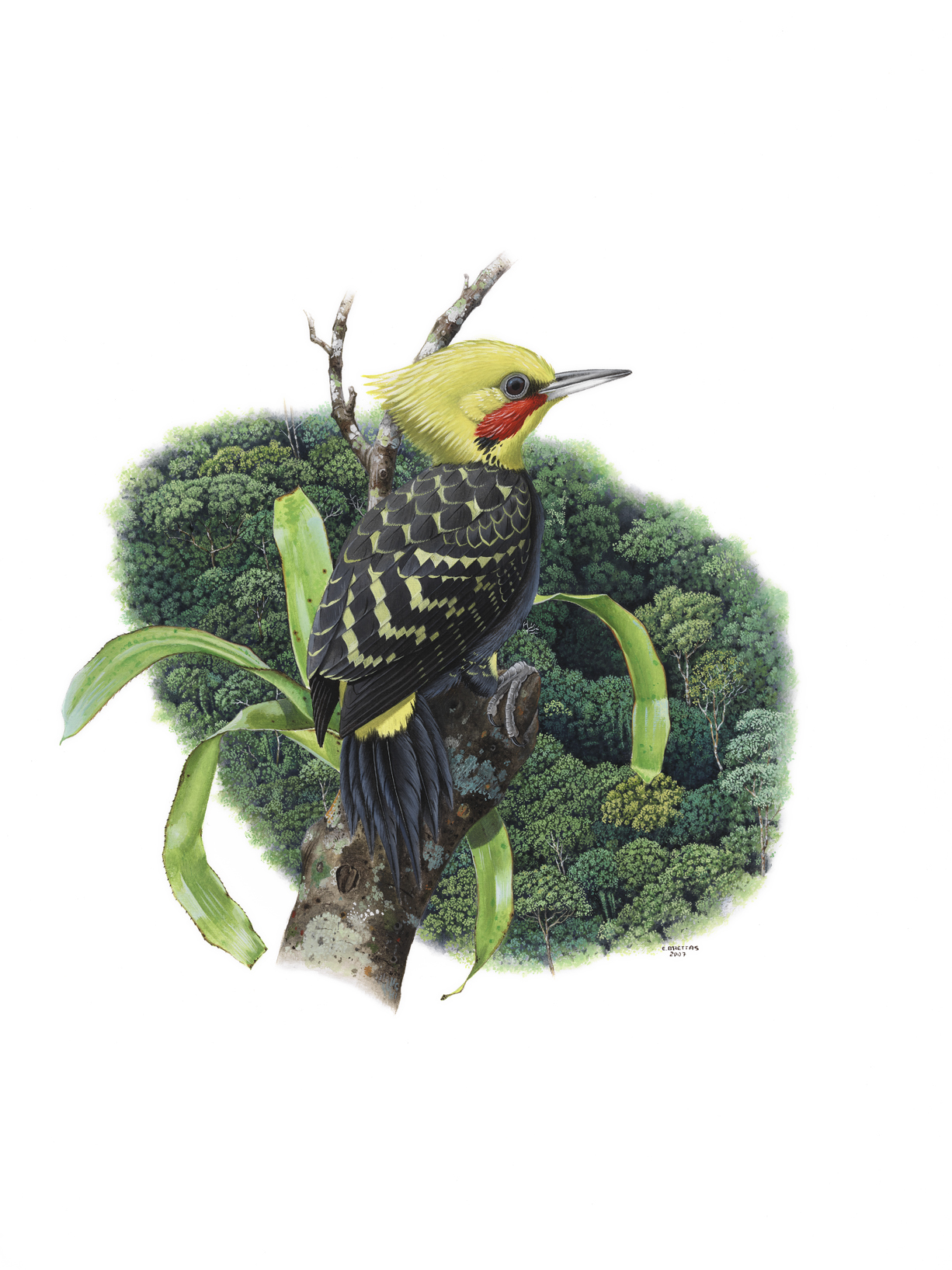
Blond-crested WoodpeckerCeleus flavescensEduardo Brettas · 200723.4 × 16.5 in · 59.4 × 42.0 cm 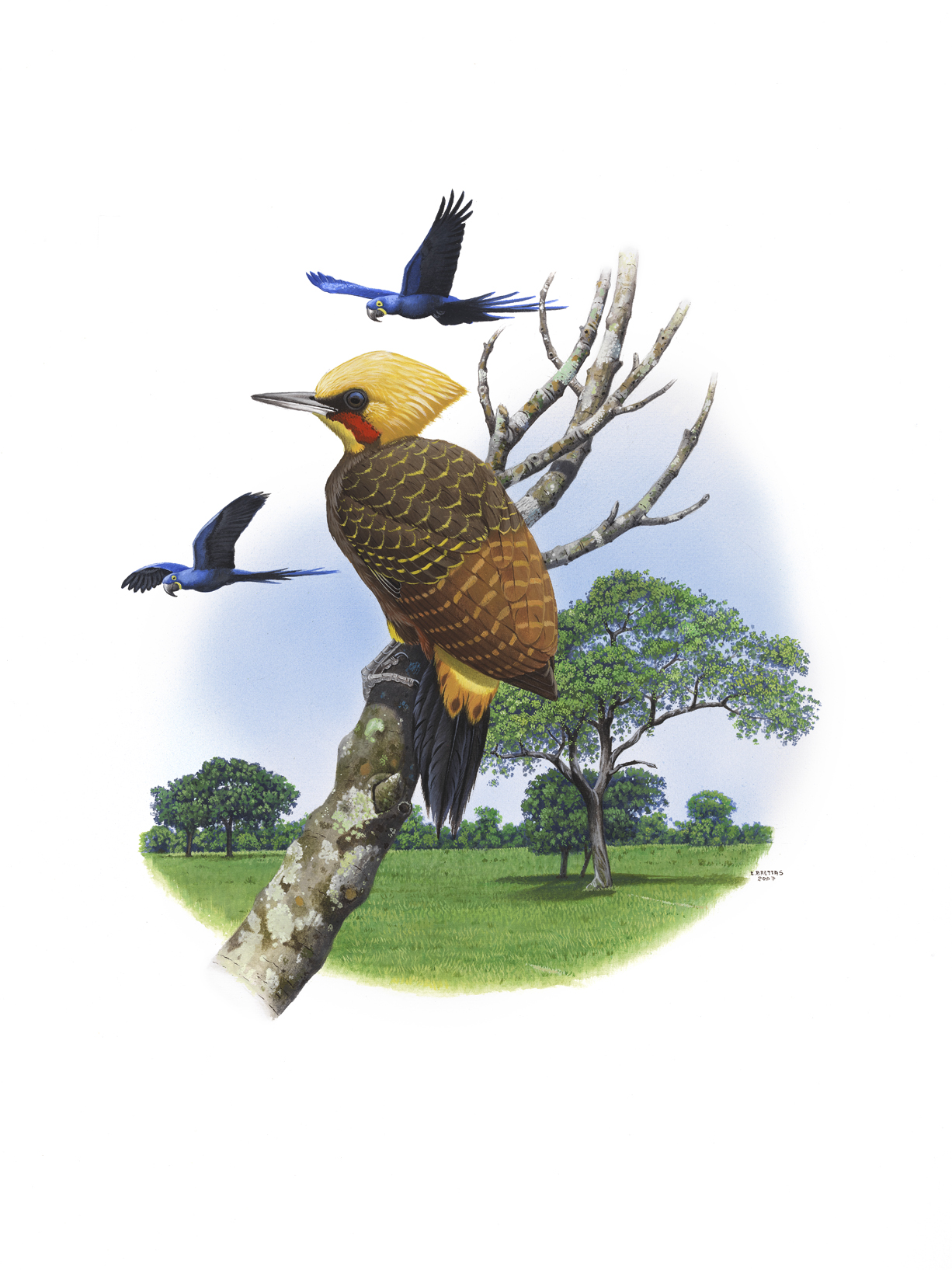
Pale-crested WoodpeckerCeleus lugubrisEduardo Brettas · 200723.4 × 16.5 in · 59.4 × 42.0 cm
Andean and cloud forest
Montane, 1,000 to 3,000 m
Elevation reorders everything. Cool, wet montane forest supports birds found nowhere in the lowlands, mountain toucans and barbets on the Pacific slope, and the cock-of-the-rock on steep ravine forest.
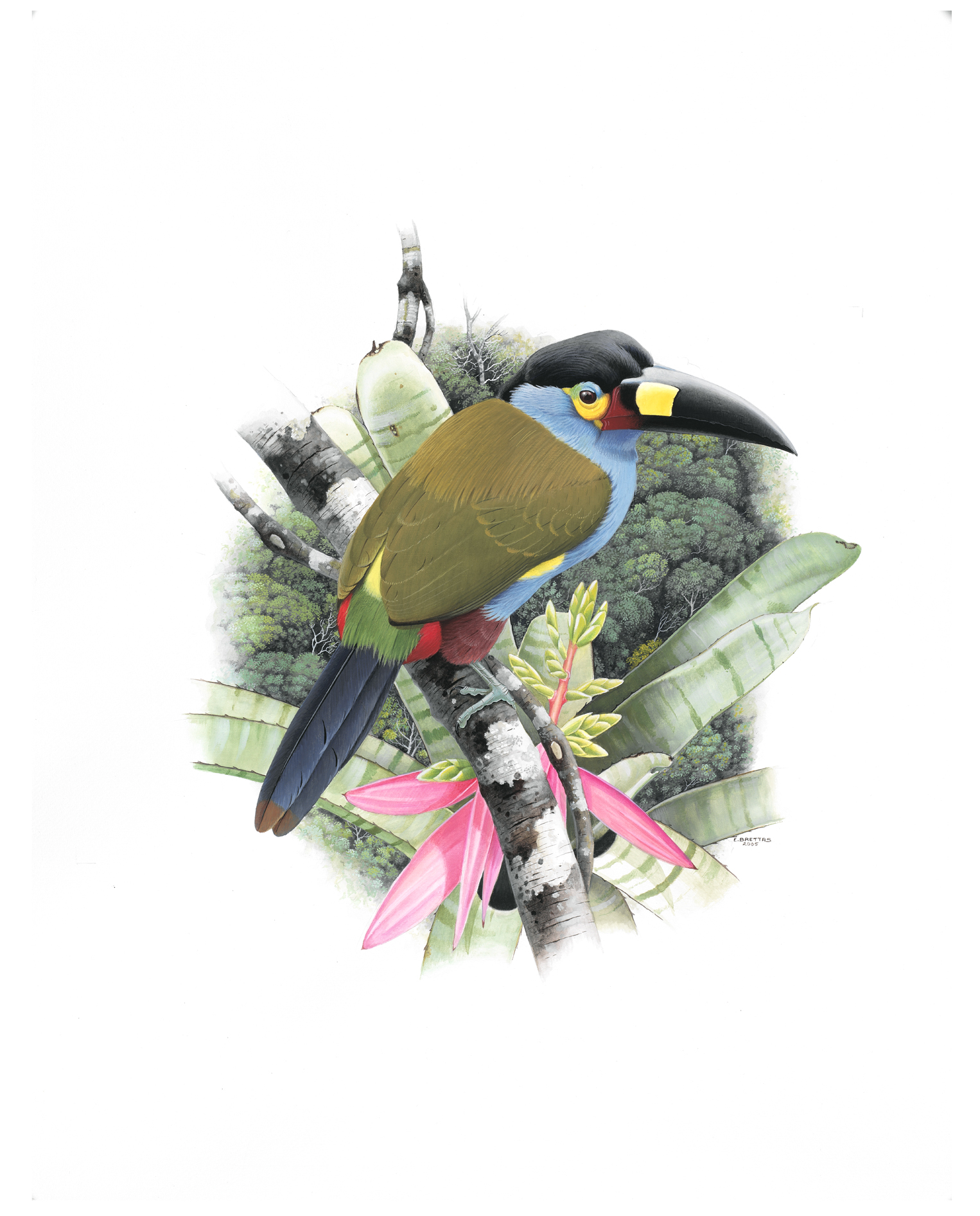
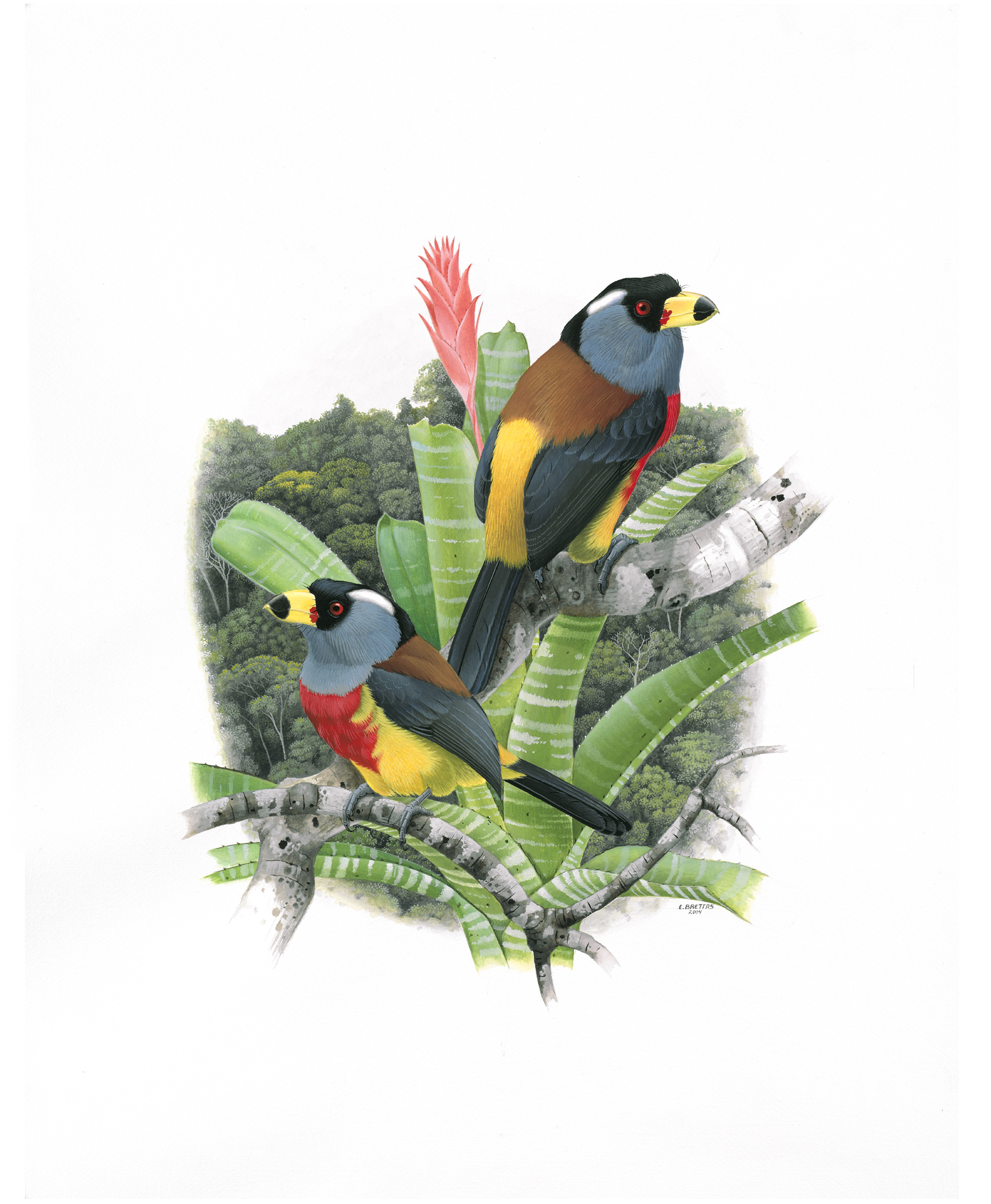
Toucan BarbetSemnornis ramphastinusEduardo Brettas · 200423.4 × 16.5 in · 59.4 × 42.0 cm 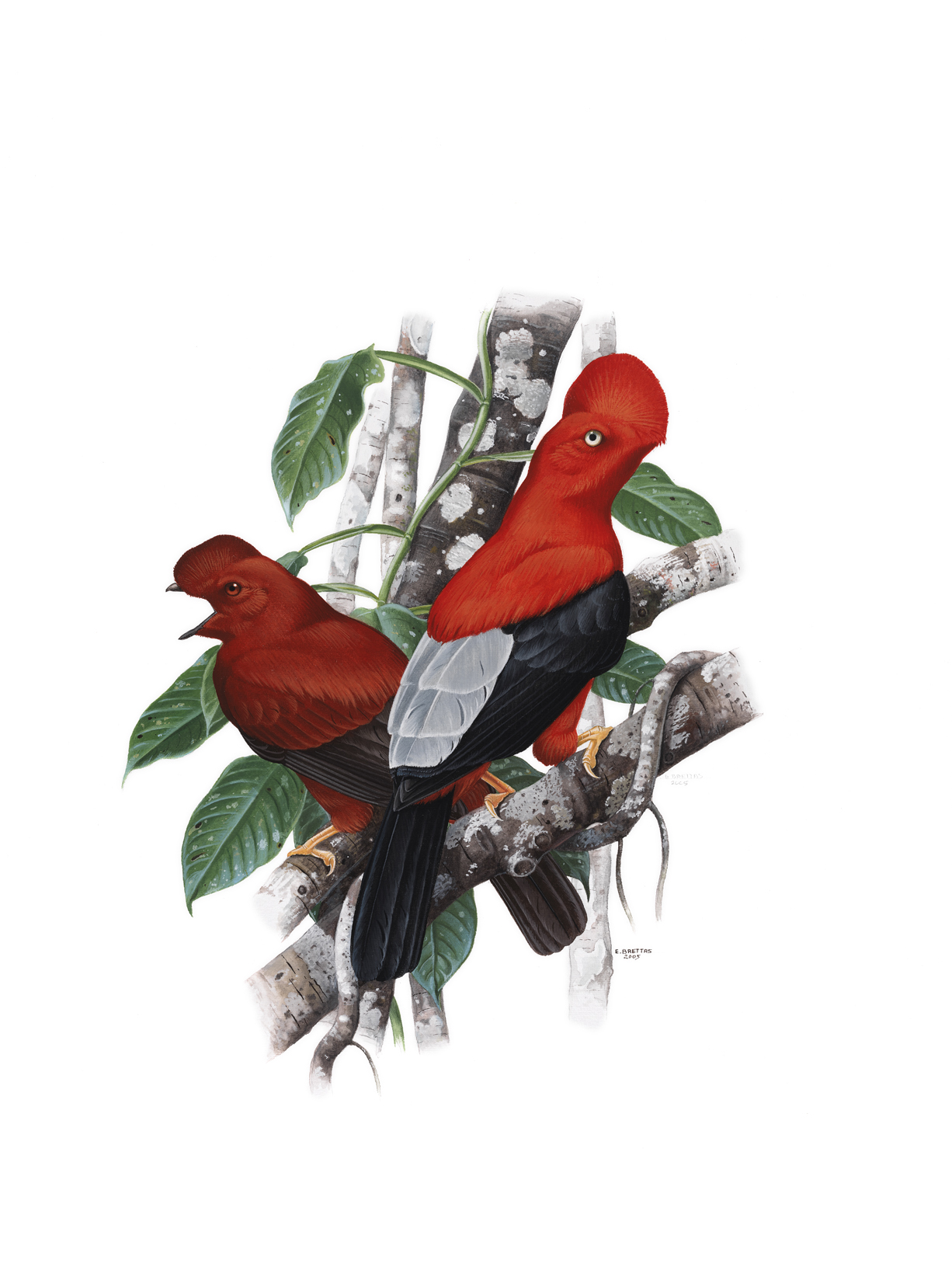
Andean Cock-of-the-rockRupicola peruvianusEduardo Brettas · 200523.4 × 16.5 in · 59.4 × 42.0 cm 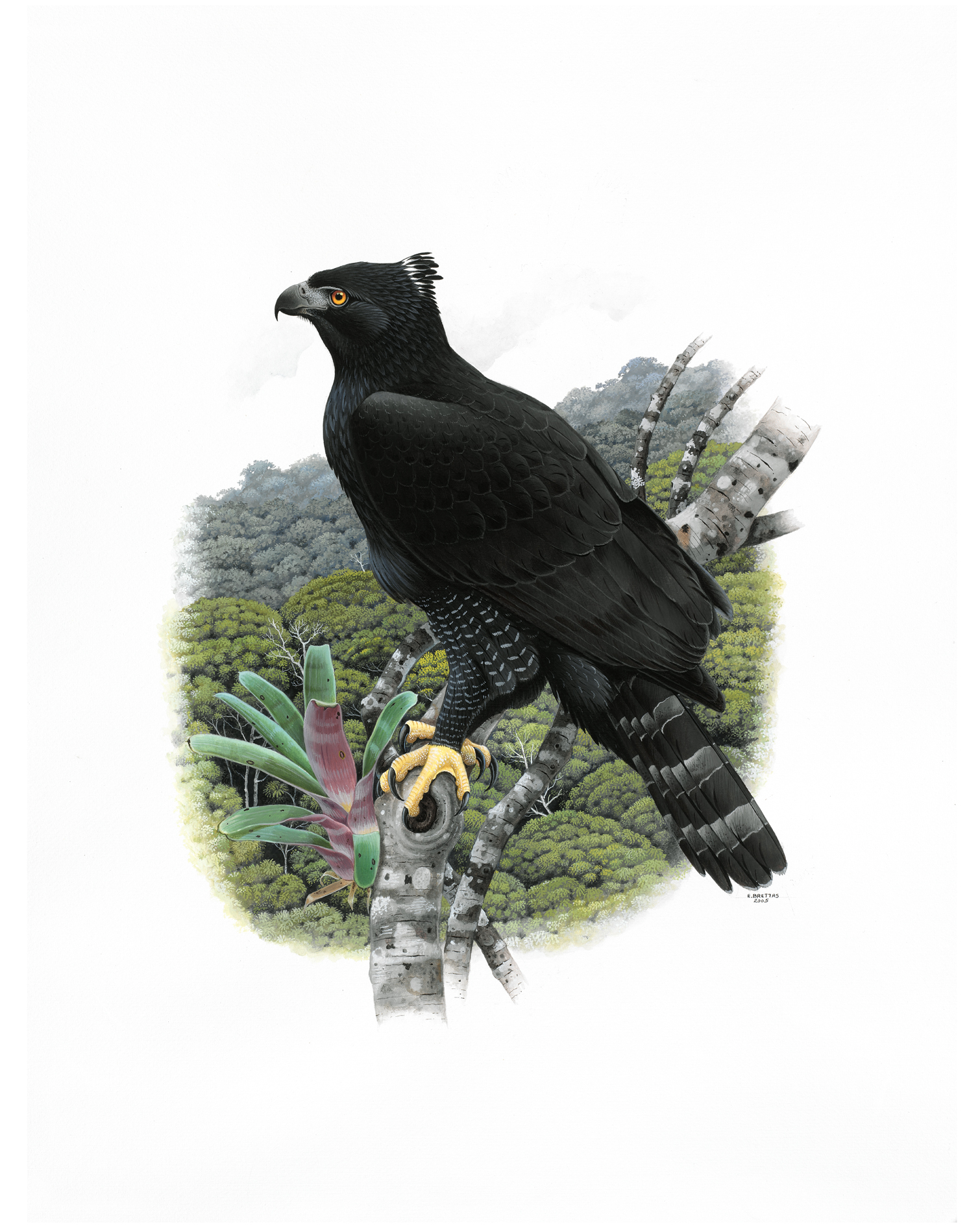
Black-and-Chestnut EagleSpizaetus isidoriEduardo Brettas · 200523.4 × 16.5 in · 59.4 × 42.0 cm
Central American forests
The continental bridge
The isthmus joins two land masses and mixes their birdlife. Mesoamerican forest and highland species belong to both continents at once, which is why the collection treats the Americas as a single subject.
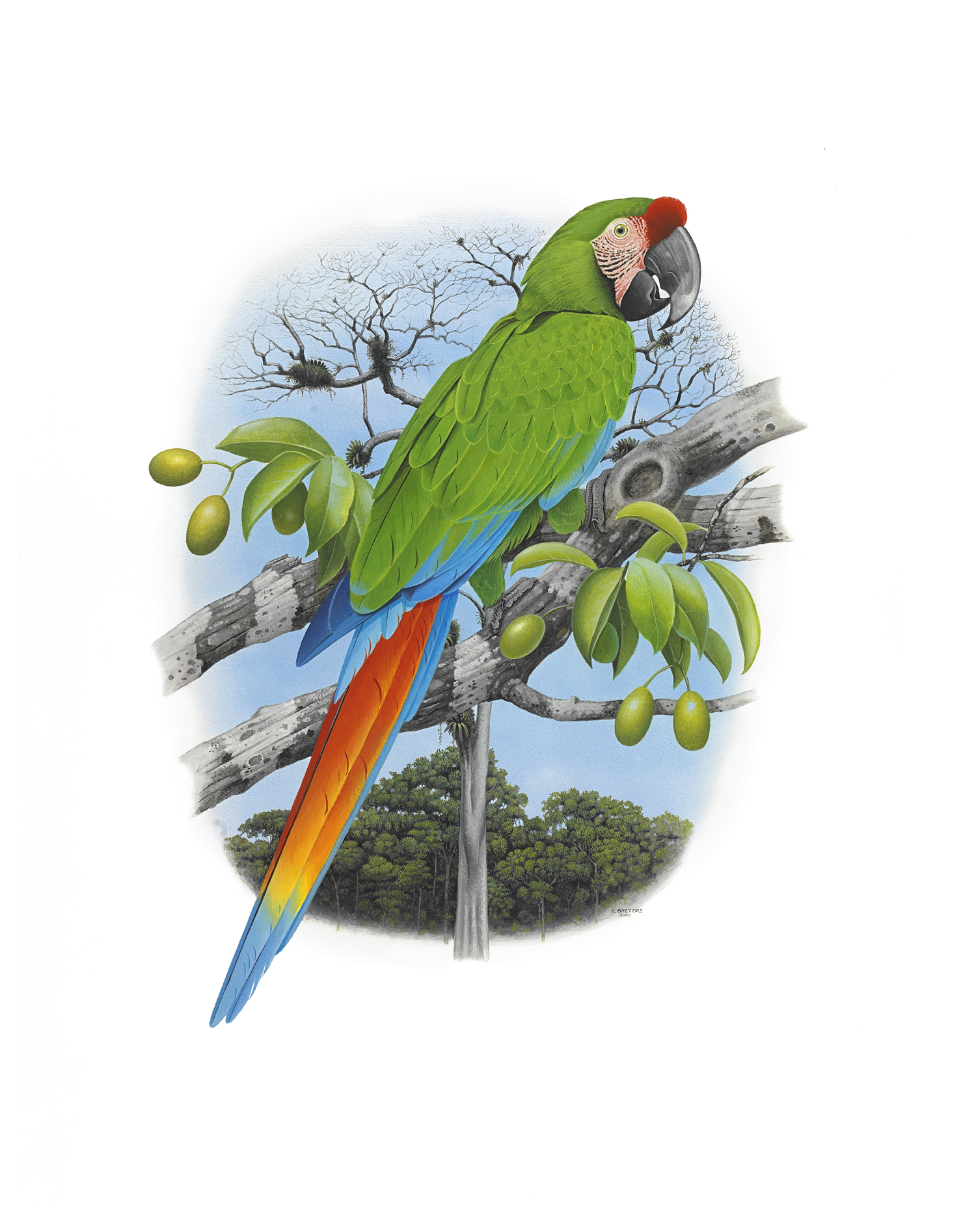
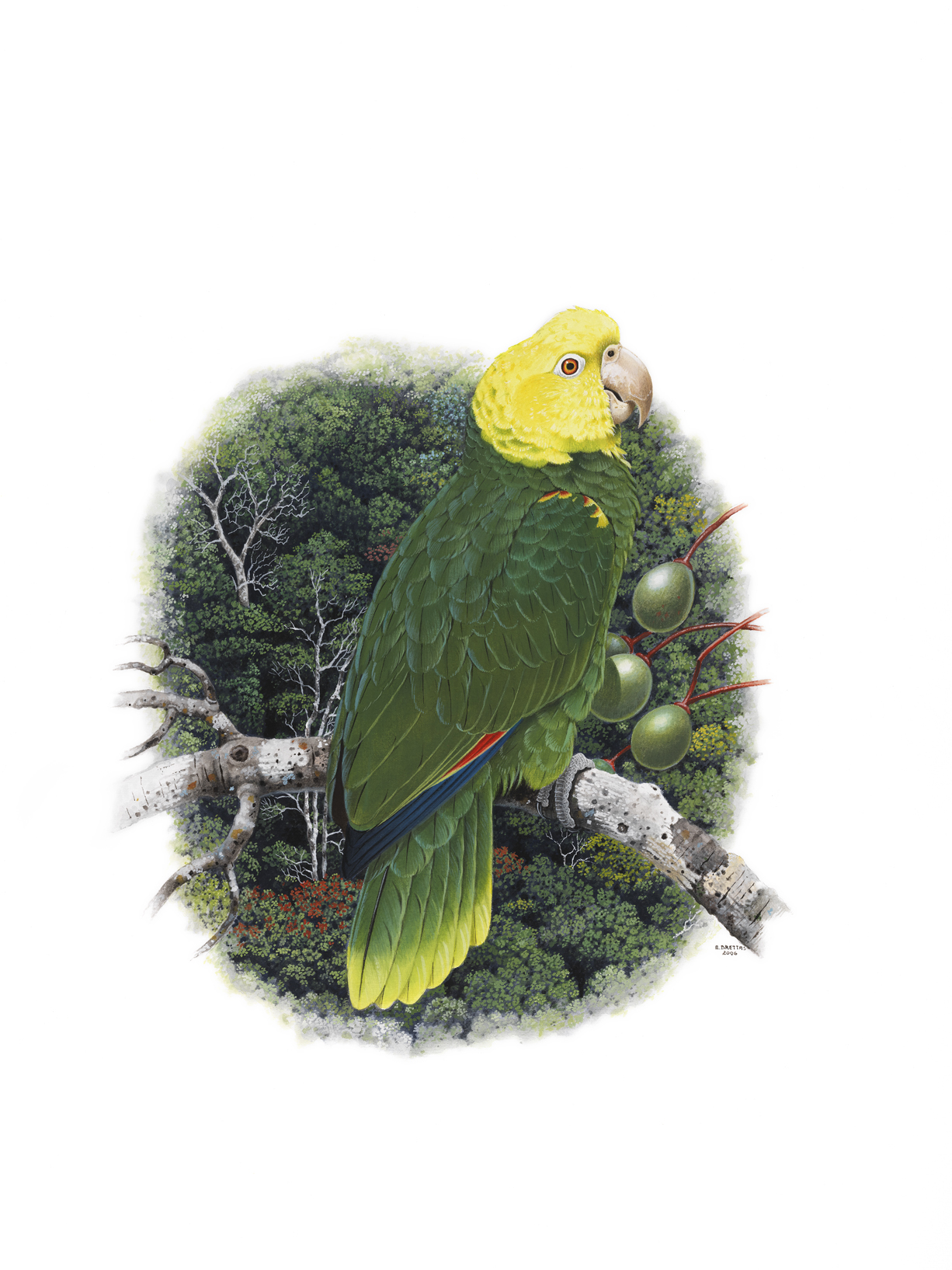
Yellow-headed ParrotAmazona oratrixEduardo Brettas · 200623.4 × 16.5 in · 59.4 × 42.0 cm 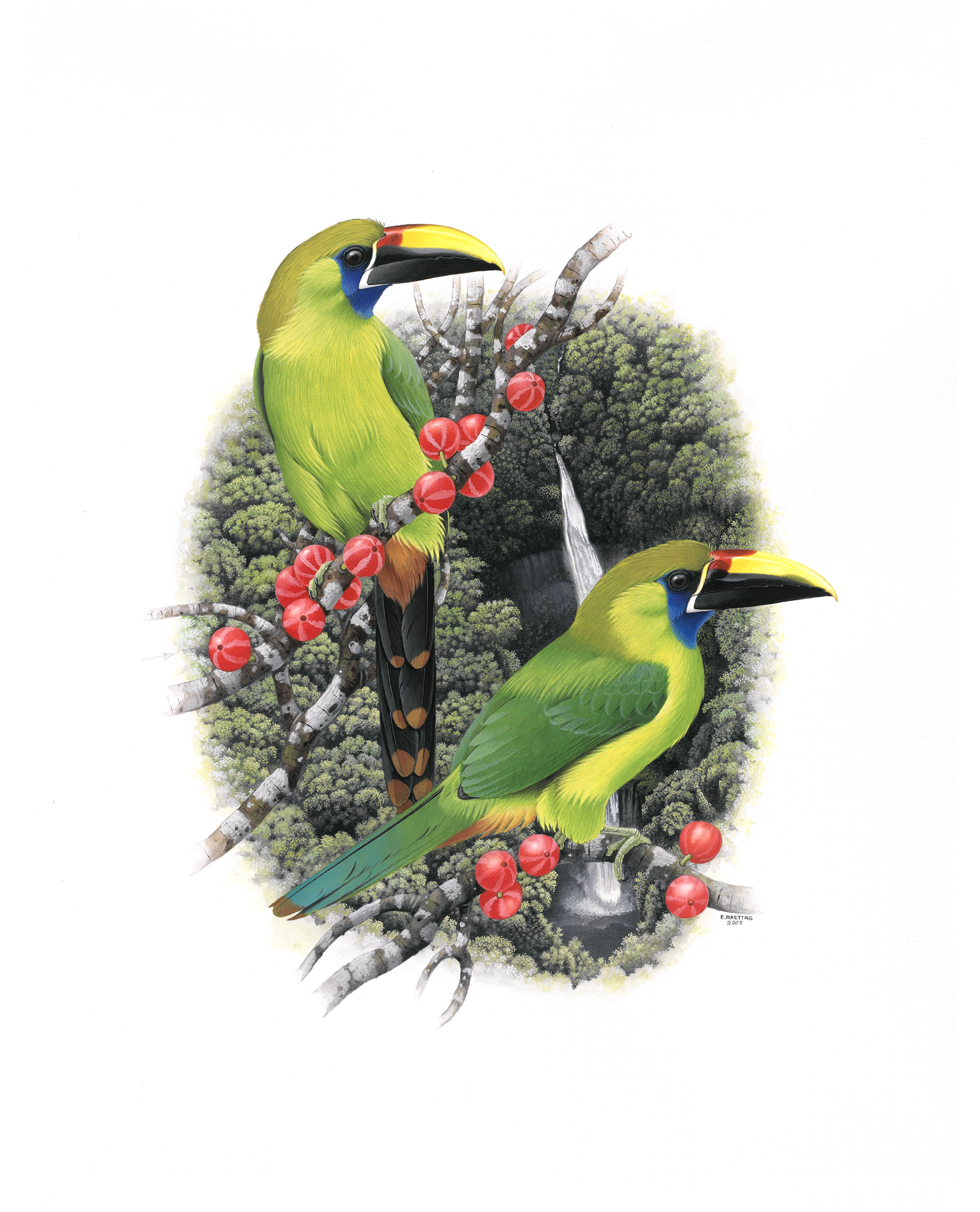
Emerald ToucanetAulacorhynchus prasinus caeruleogularisEduardo Brettas · 200523.4 × 16.5 in · 59.4 × 42.0 cm 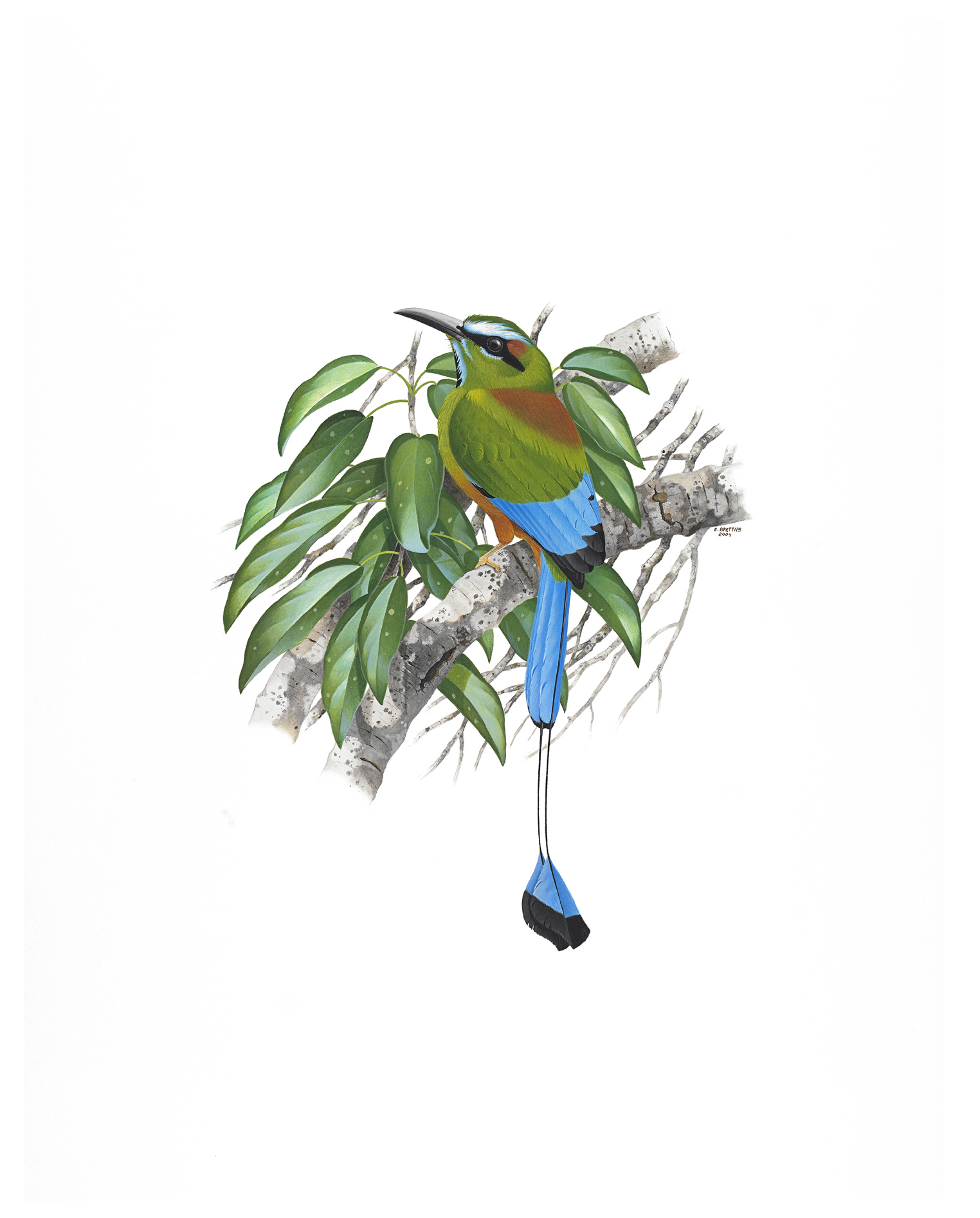
Turquoise-browed MotmotEumomota superciliosaEduardo Brettas · 200423.4 × 16.5 in · 59.4 × 42.0 cm 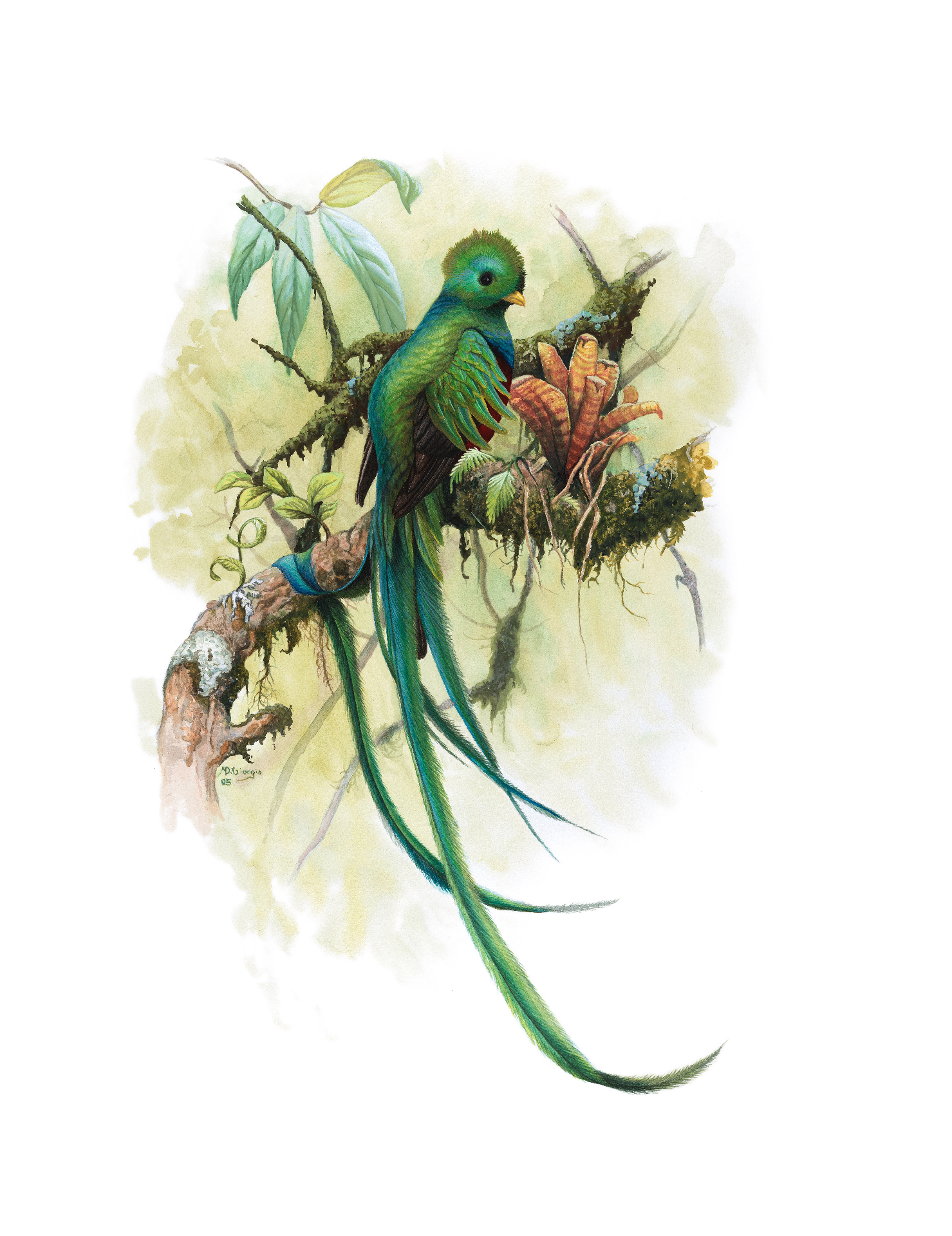
Resplendent QuetzalPharomachrus mocinnoMichael DiGiorgio · 200525.6 × 19.5 in · 65 × 49.5 cm
Wetlands, marsh and coast
Rivers, lagoons and shorelines
Wetland and coastal habitats recur from tropical estuary to temperate marsh, and the birds that depend on them are among the most widely distributed in the collection.
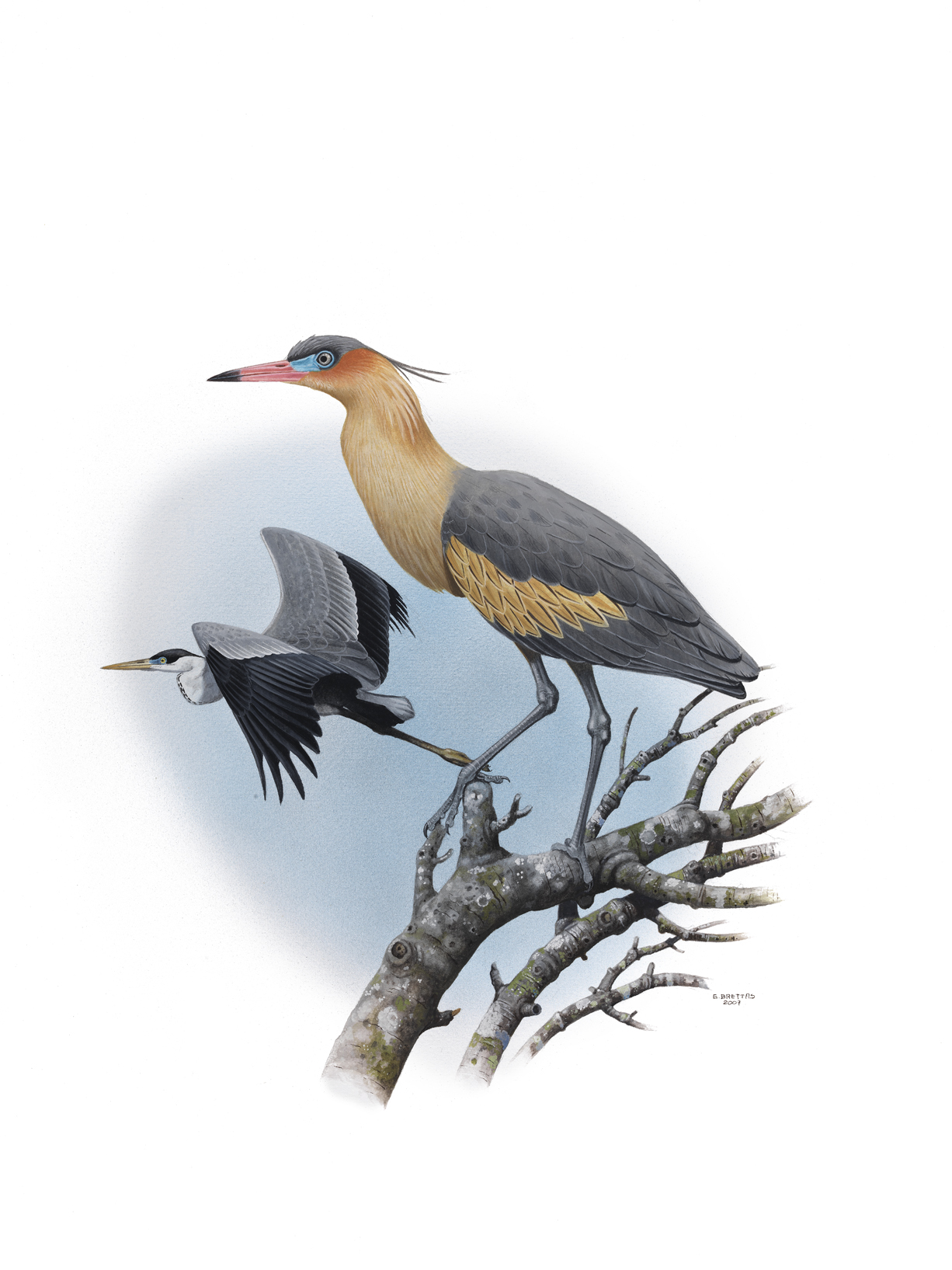
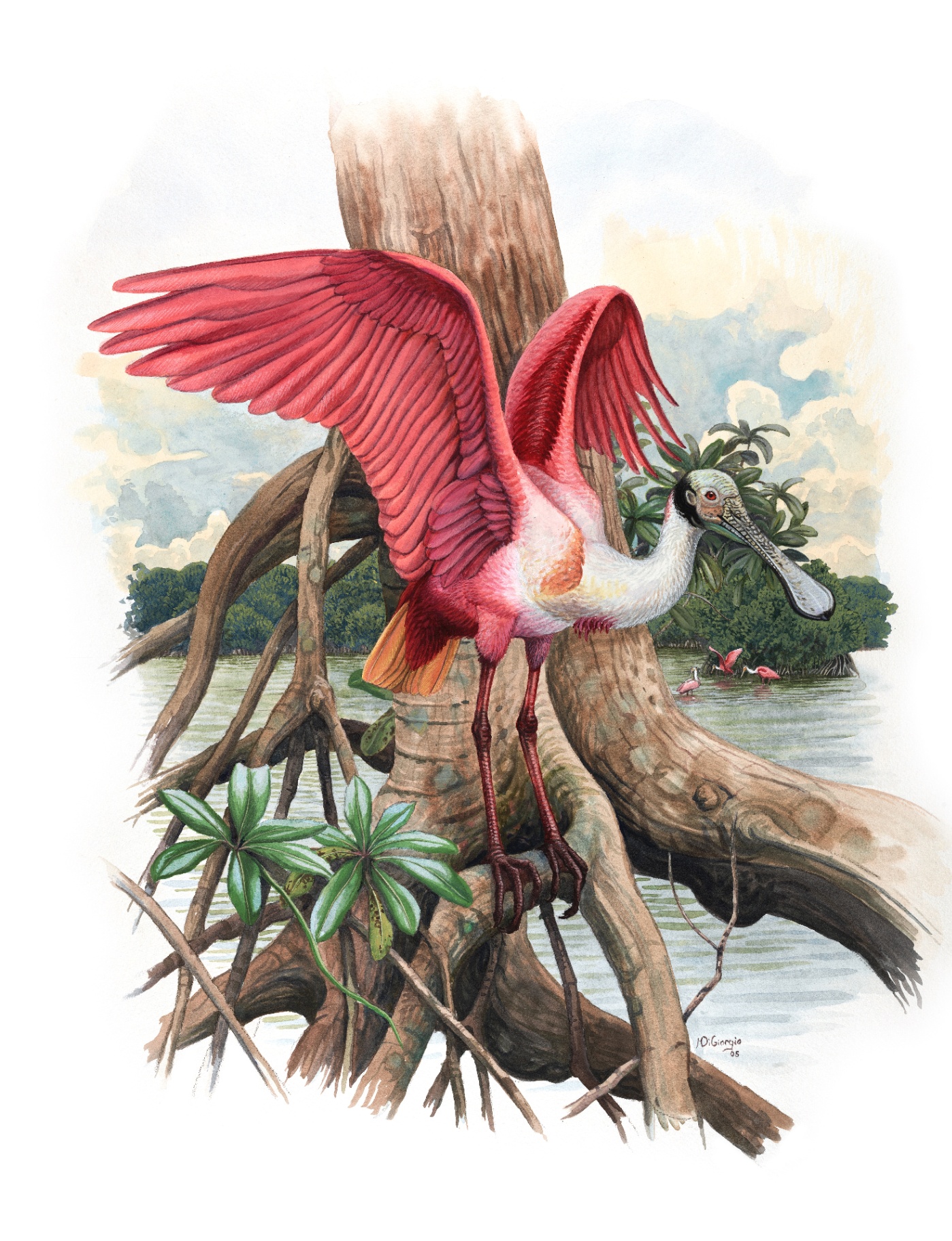
Roseate SpoonbillPlatalea ajajaMichael DiGiorgio · 200525.6 × 19.5 in · 65 × 49.5 cm 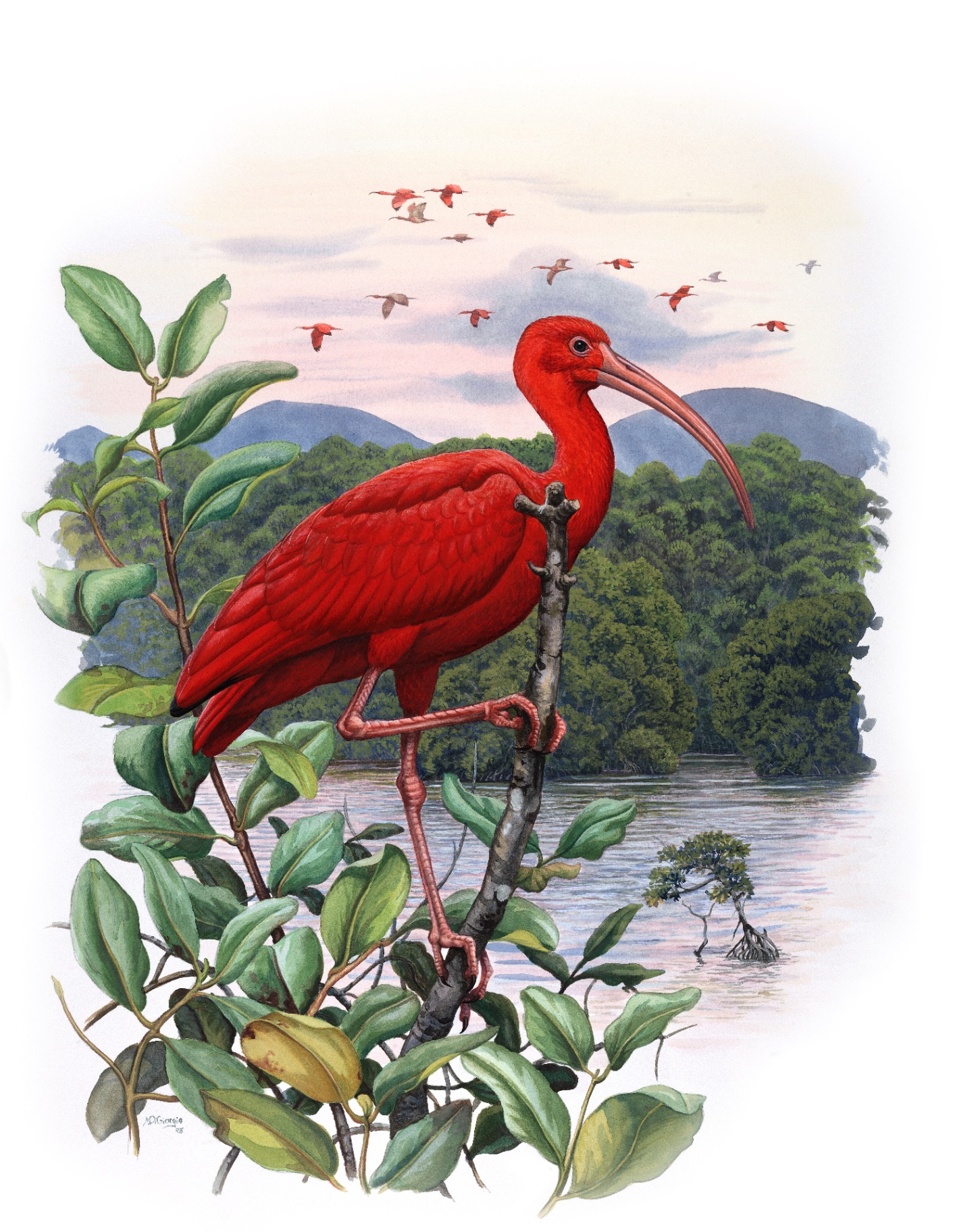
Scarlet IbisEudocimus ruberMichael DiGiorgio · 200525.6 × 19.5 in · 65 × 49.5 cm 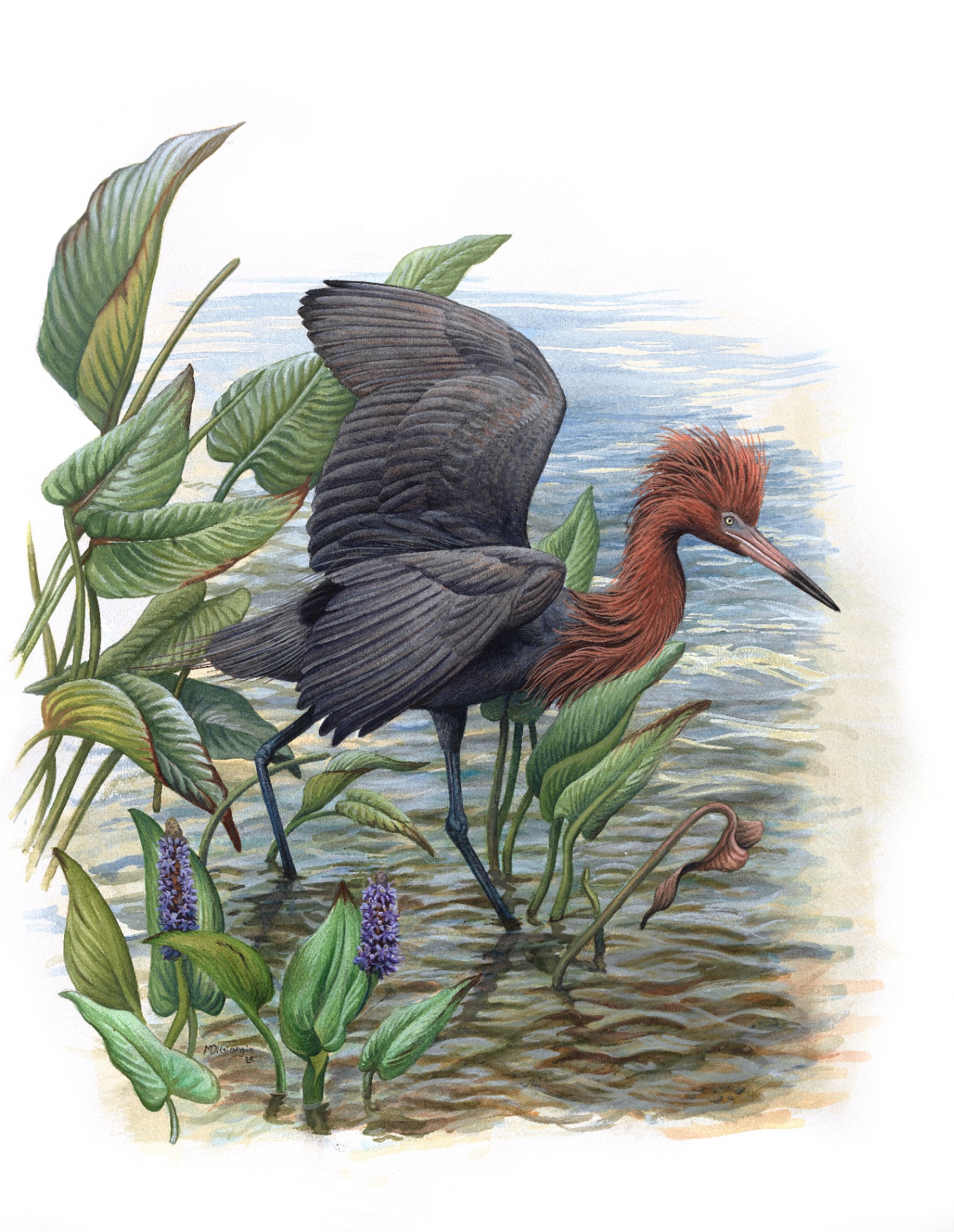
Reddish EgretEgretta rufescensMichael DiGiorgio · 200525.6 × 19.5 in · 65 × 49.5 cm
Grassland, steppe and dry woodland
Temperate and subtropical plains
Open country reaches far south into Patagonian steppe and north into the grasslands and rangeland of the interior, habitat for parrots of arid cliffs and for raptors that hunt from exposed perches.
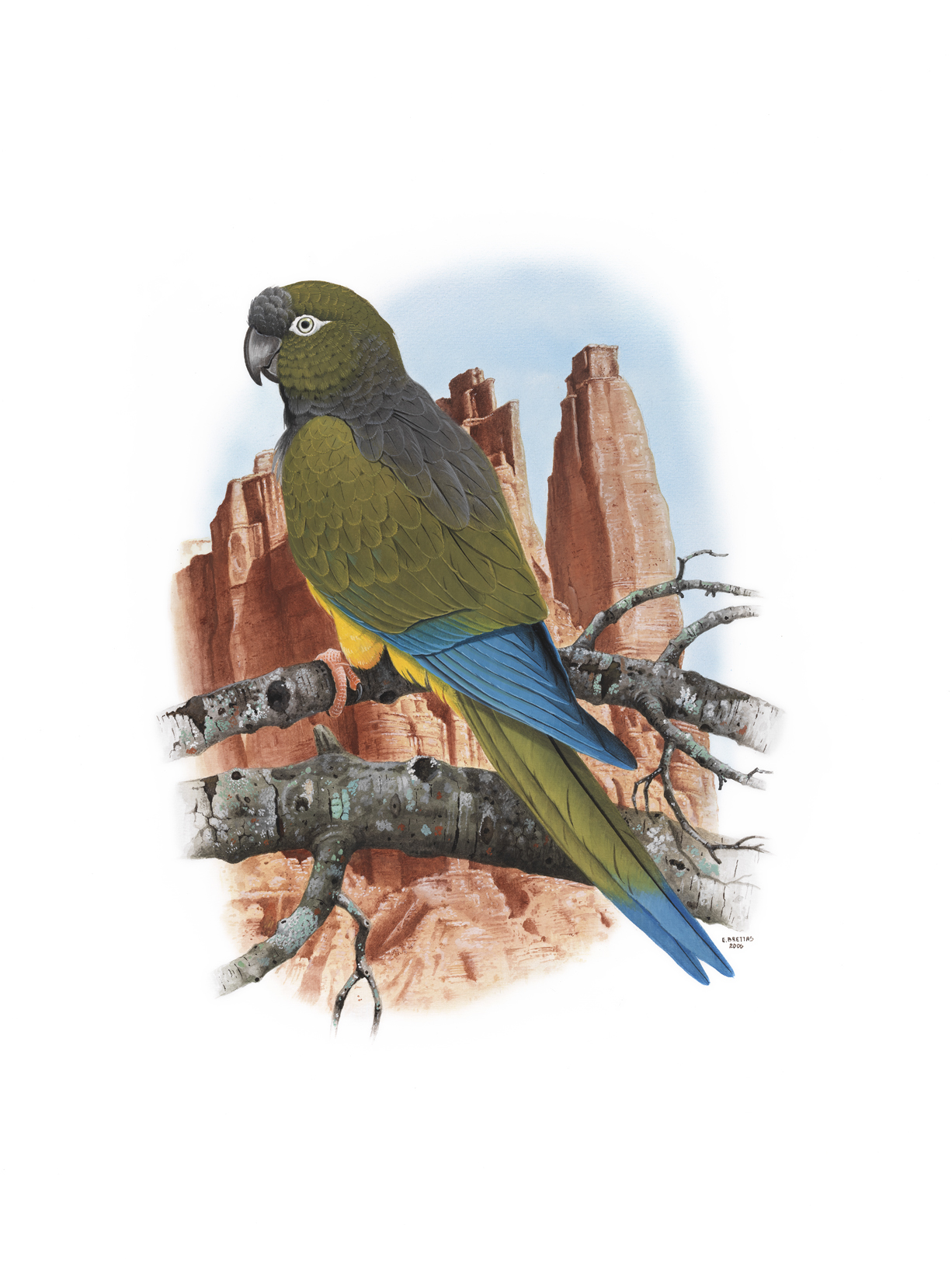
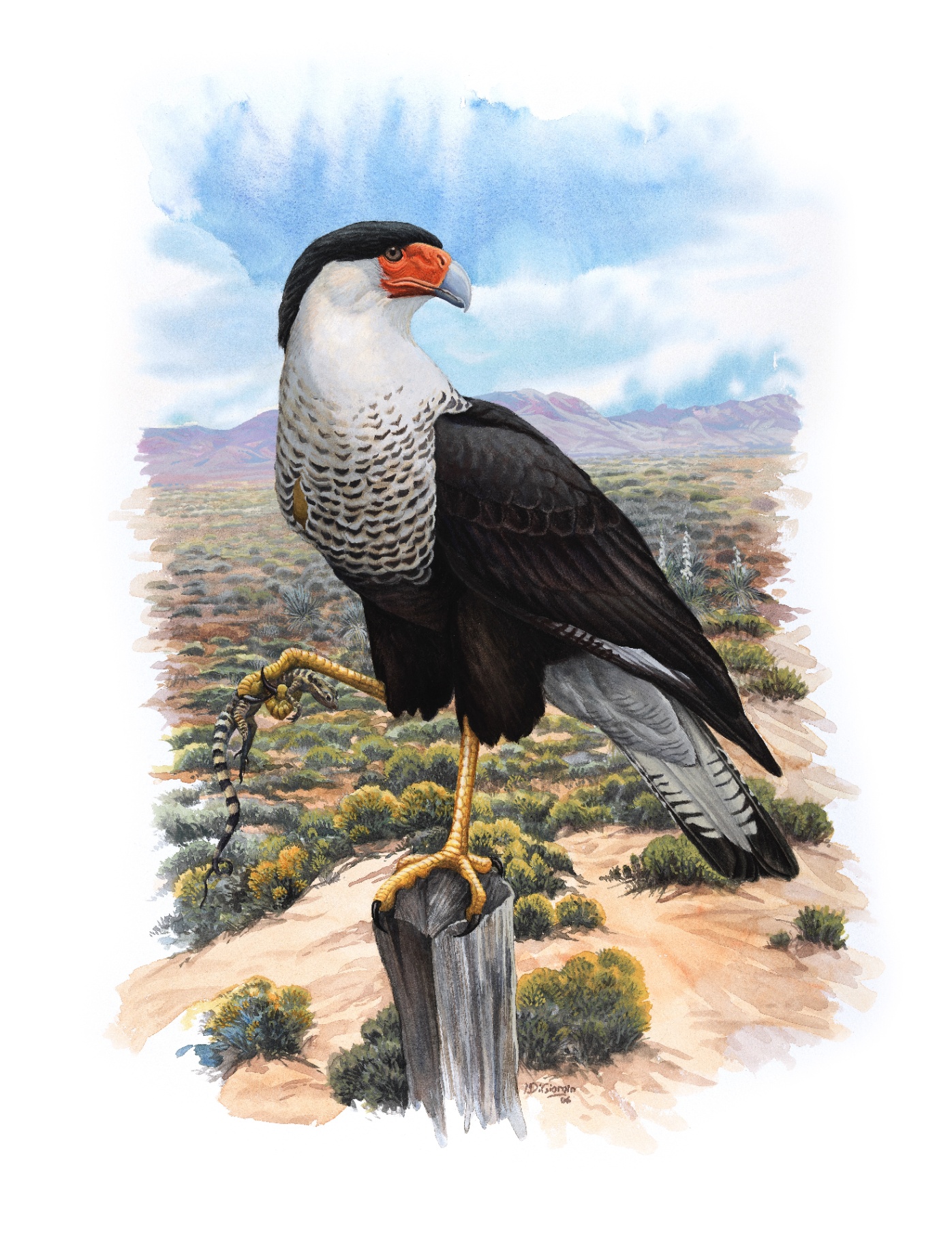
Crested CaracaraCaracara plancusMichael DiGiorgio · 200625.6 × 19.5 in · 65 × 49.5 cm 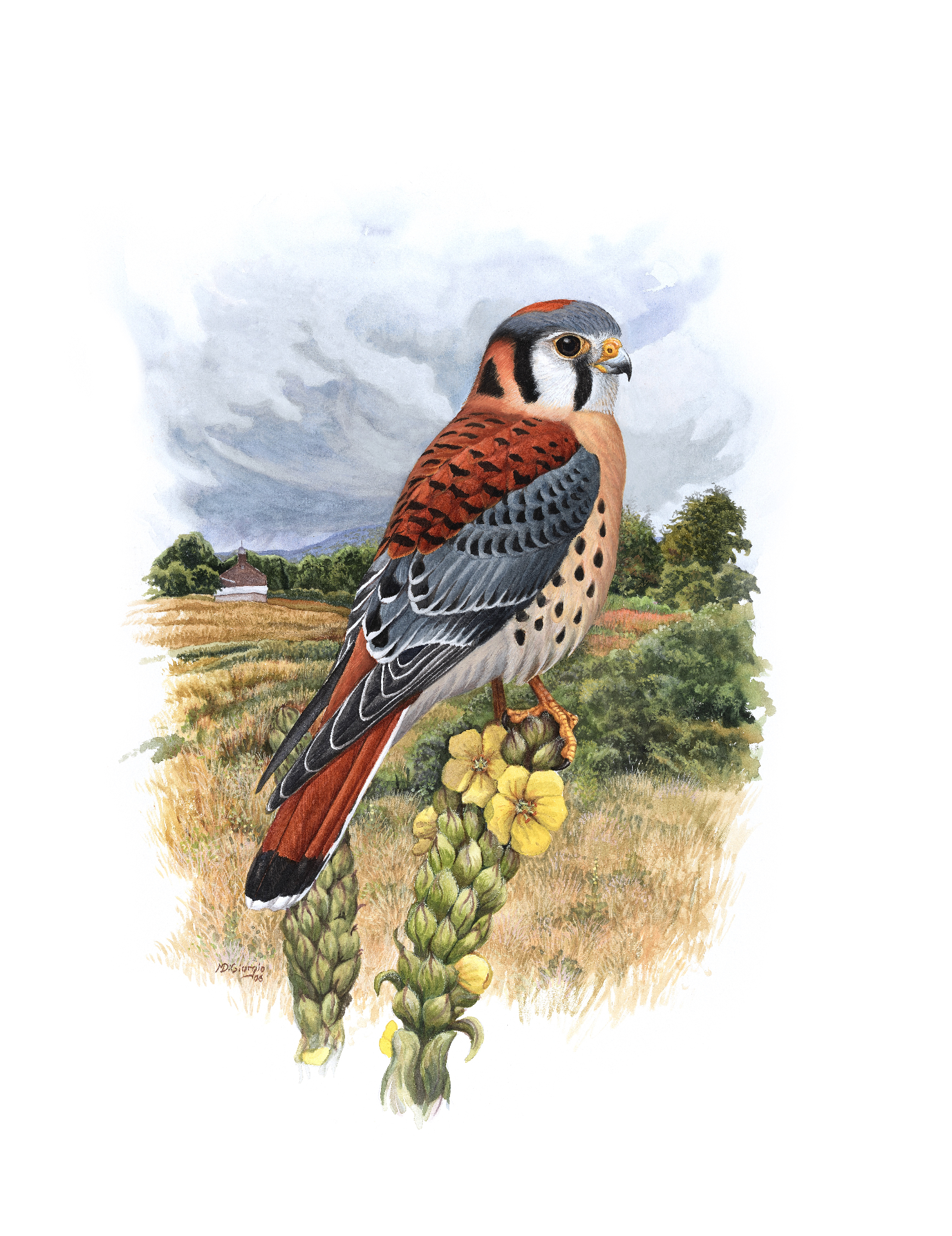
American KestrelFalco sparveriusMichael DiGiorgio · 200625.6 × 19.5 in · 65 × 49.5 cm
Woodland, pine and mountain
Nearctic mid-latitudes
Northward the forest changes composition again, oak and bottomland hardwood, southwestern canyon woodland, and the high pine forests of the Sierra Madre.
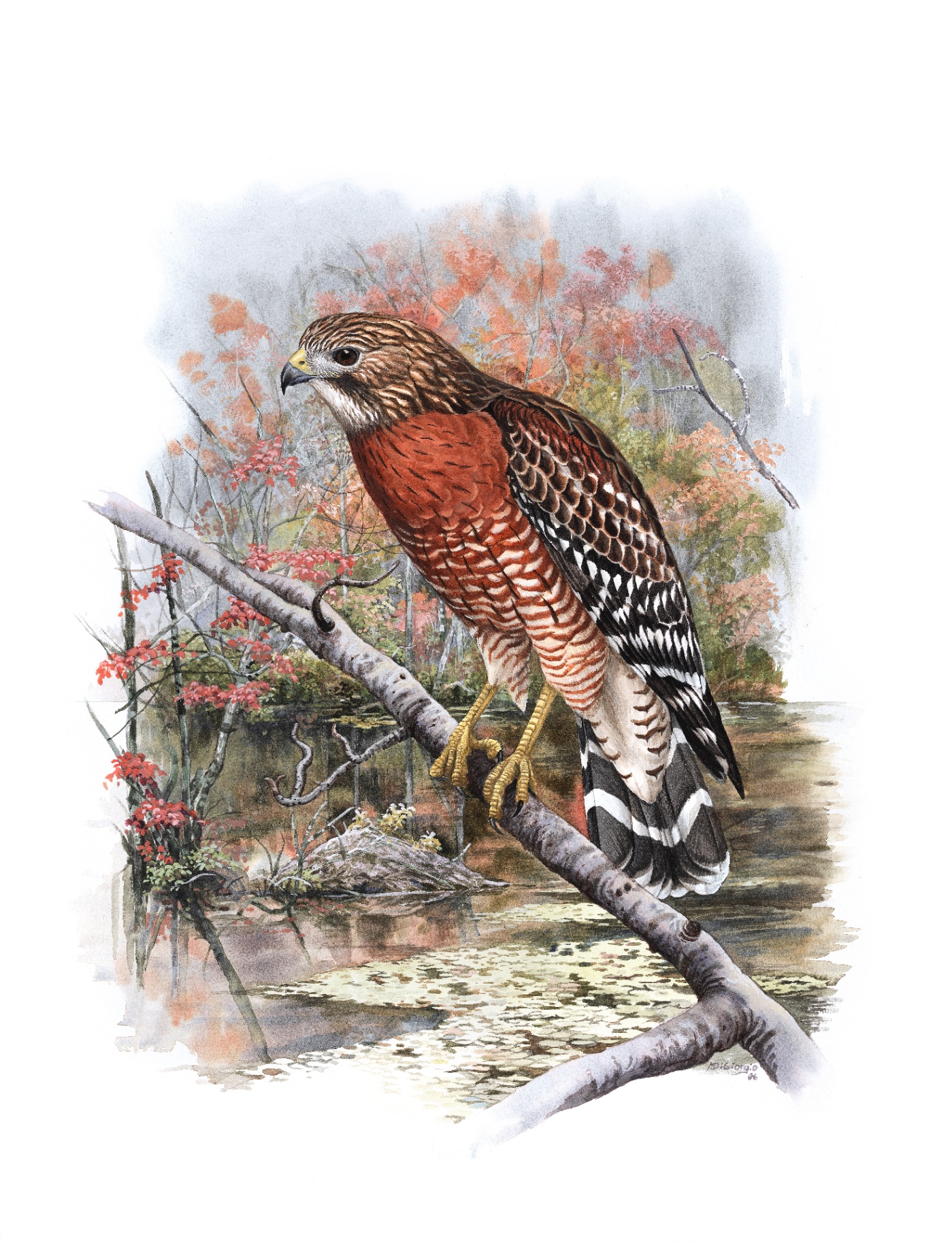
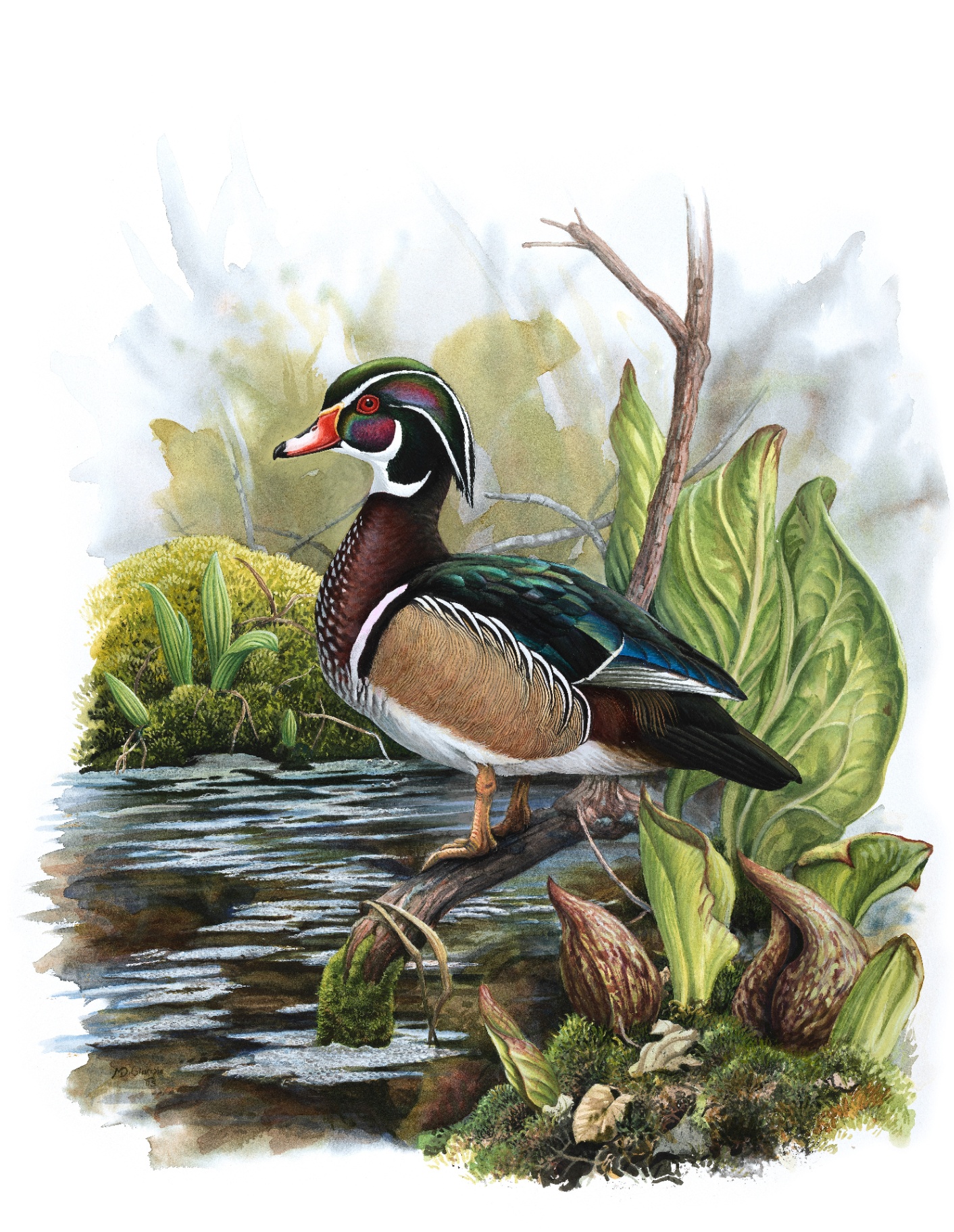
Wood DuckAix sponsaMichael DiGiorgio · 200525.6 × 19.5 in · 65 × 49.5 cm 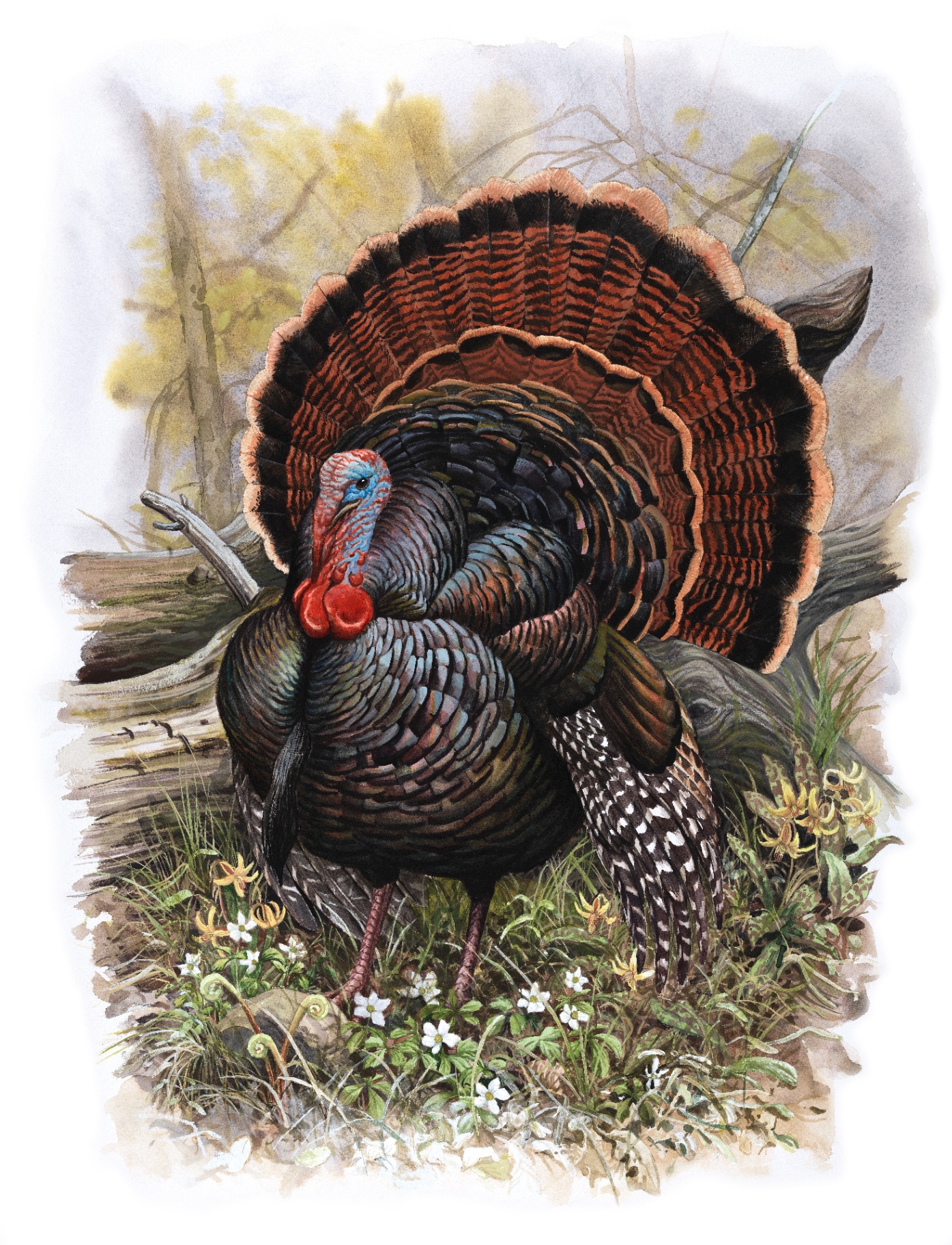
Wild TurkeyMeleagris gallopavoMichael DiGiorgio · 200525.6 × 19.5 in · 65 × 49.5 cm 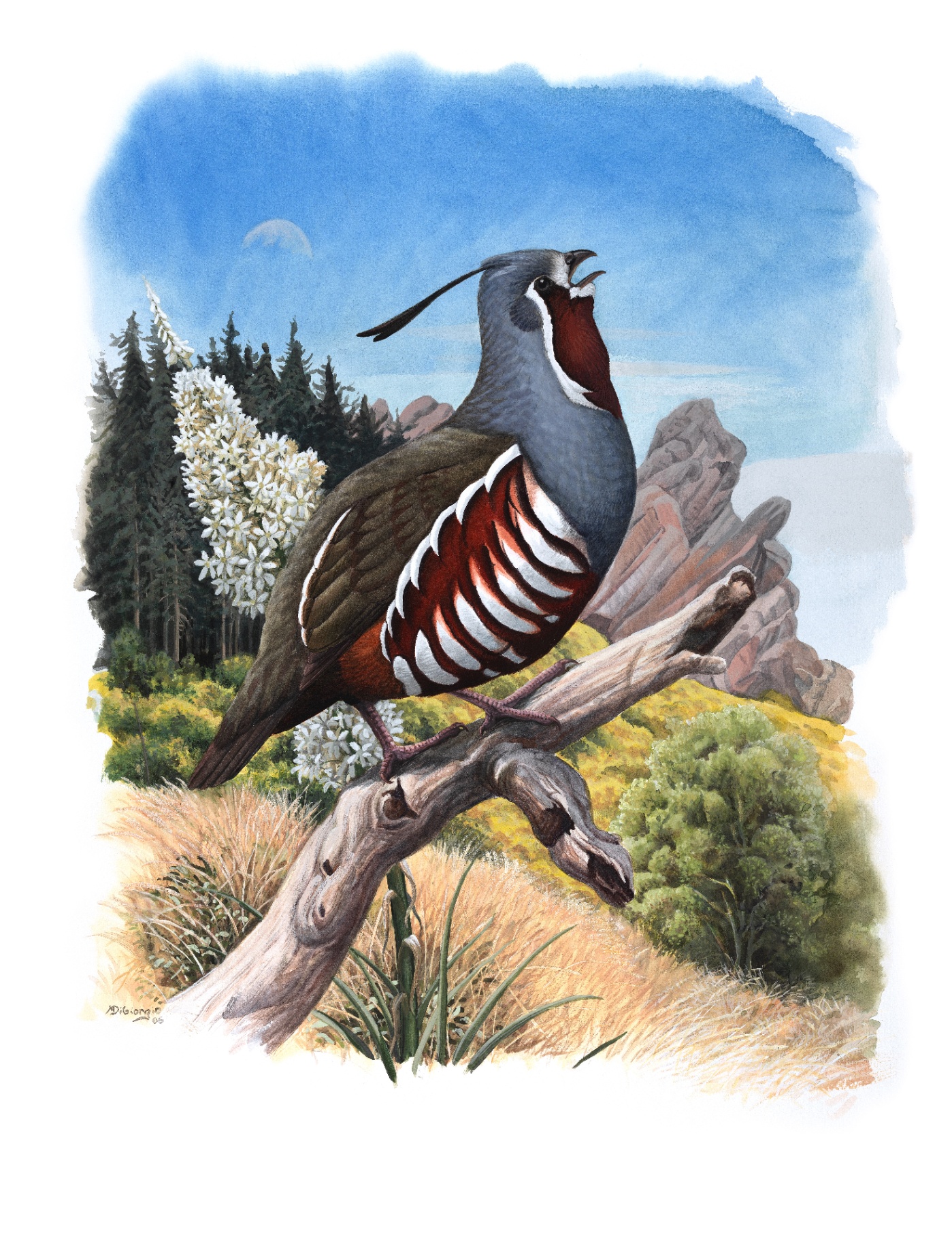
Mountain QuailOreortyx pictusMichael DiGiorgio · 200625.6 × 19.5 in · 65 × 49.5 cm 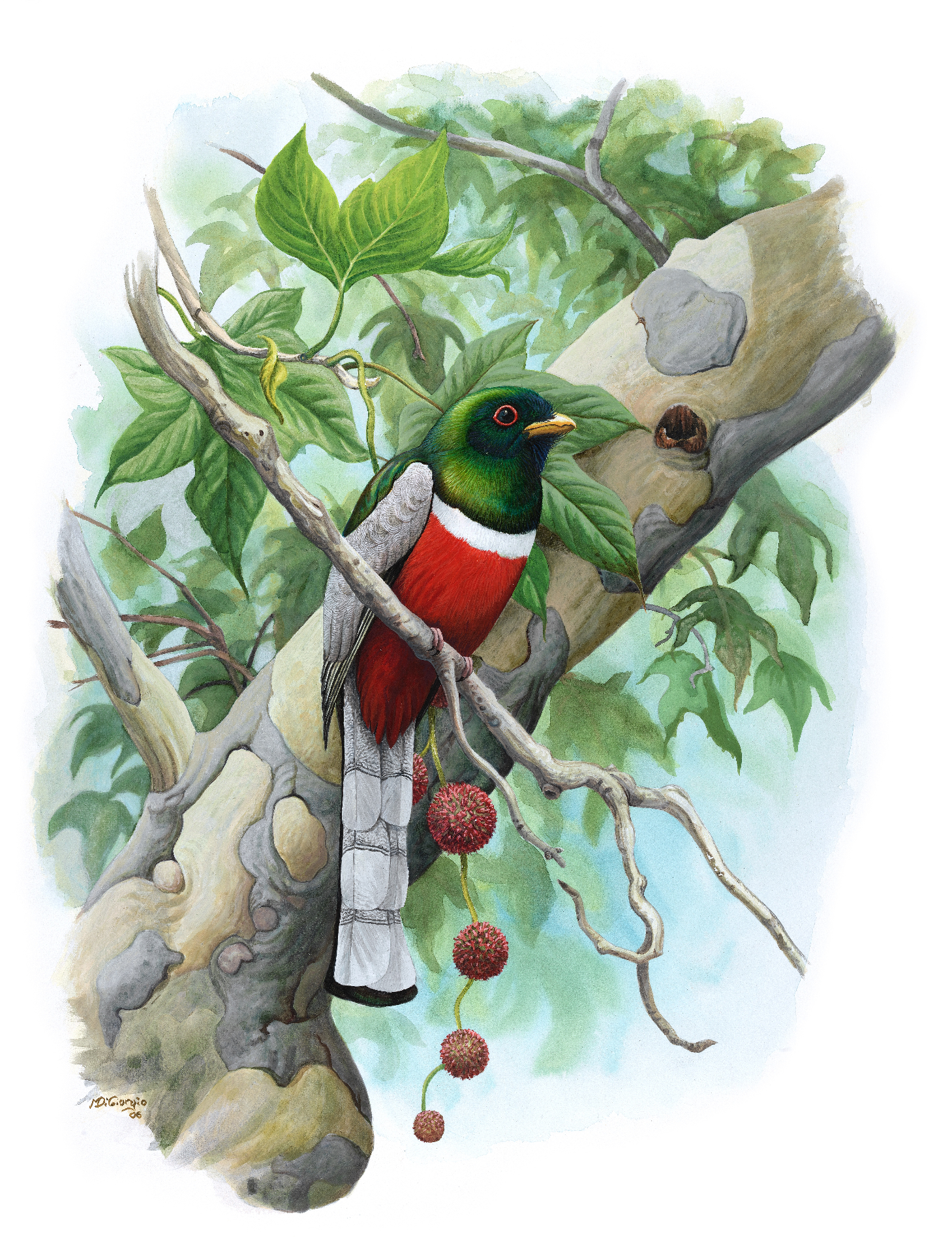
Elegant TrogonTrogon elegansMichael DiGiorgio · 200625.6 × 19.5 in · 65 × 49.5 cm 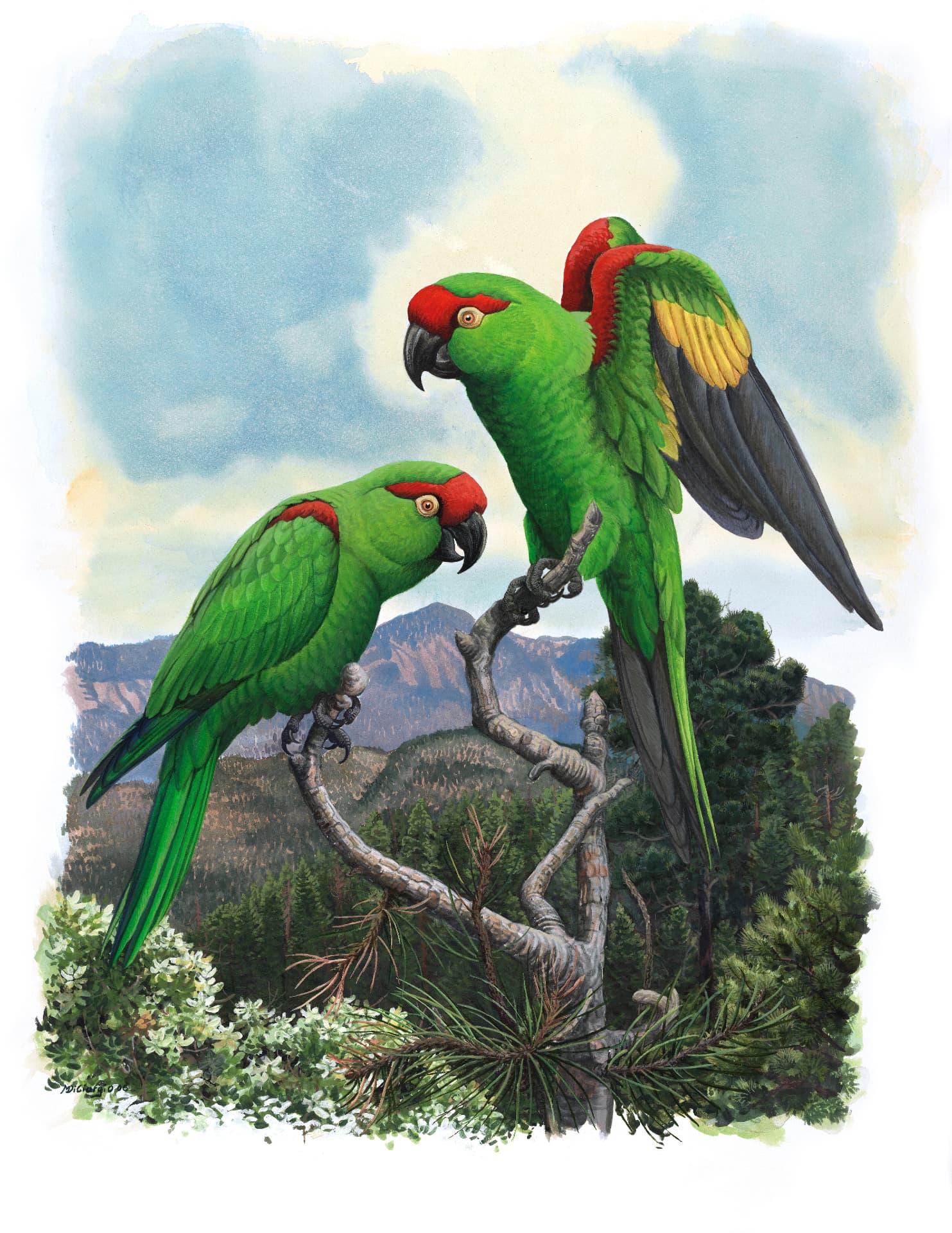
Thick-billed ParrotRhynchopsitta pachyrhynchaMichael DiGiorgio · 200625.6 × 19.5 in · 65 × 49.5 cm
Boreal forest and tundra
Subarctic and Arctic
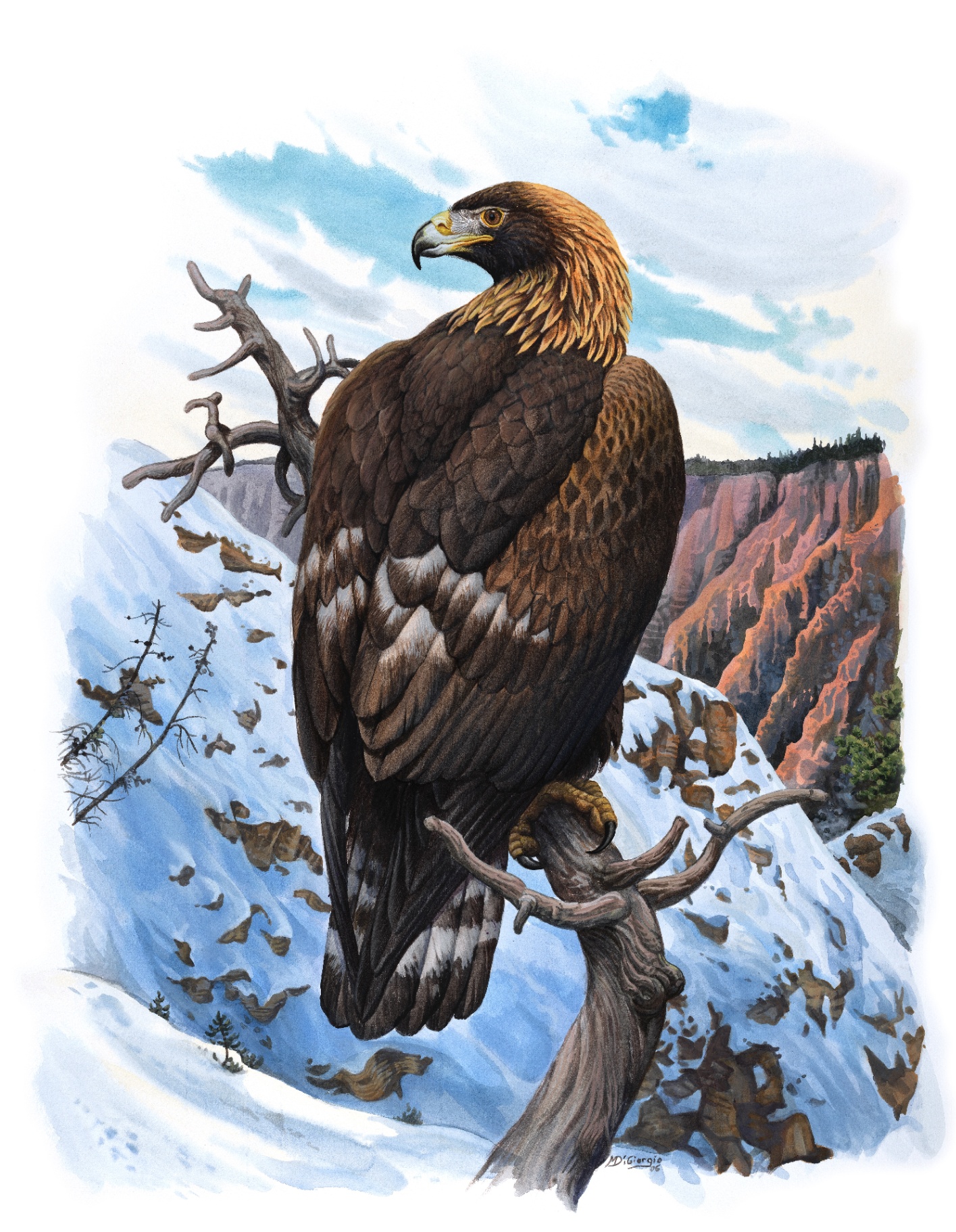
At the northern limit the collection reaches cold, open country and fast northern rivers, the range of eagles, of the snowy owl, and of sea ducks that winter along rocky coasts.
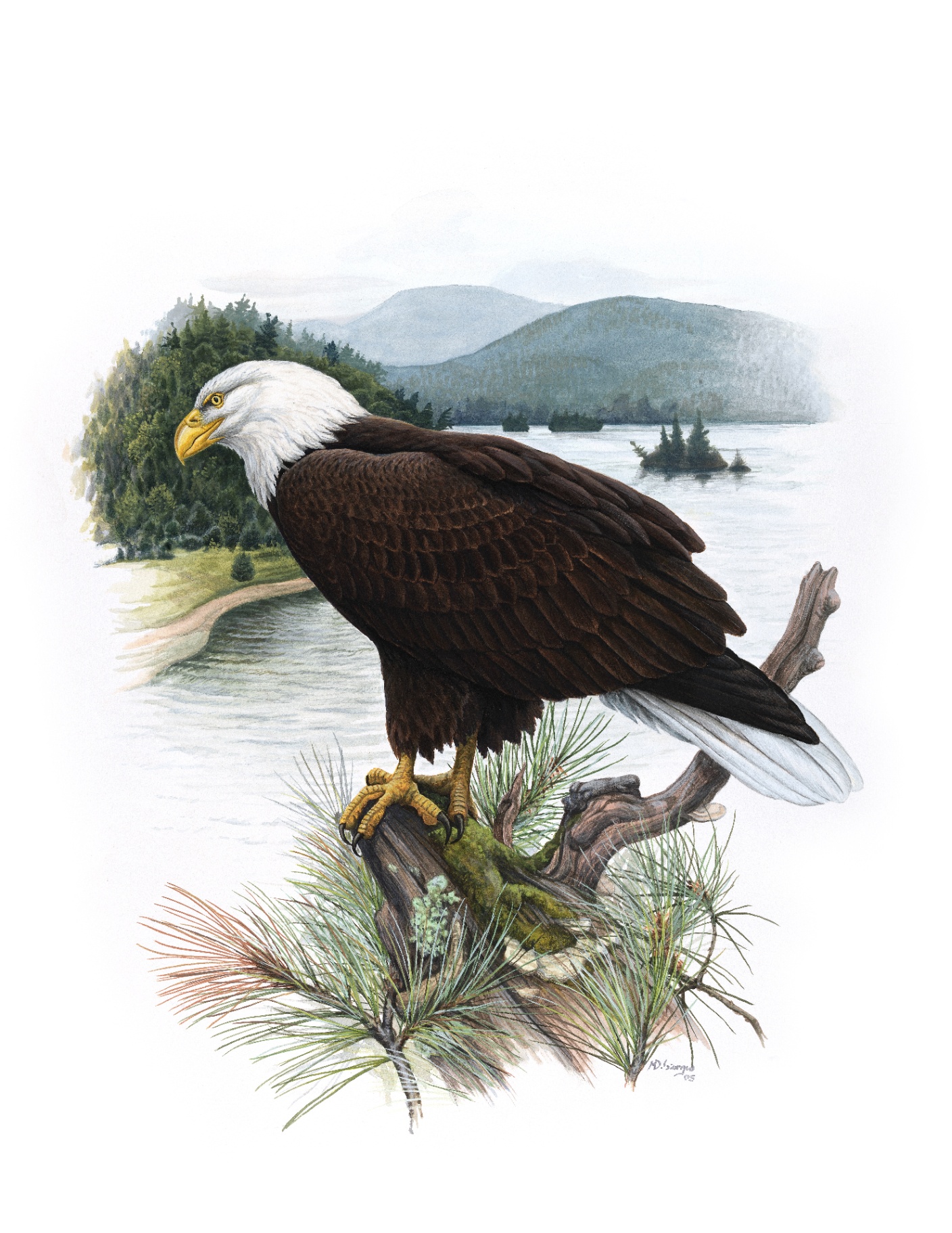
Bald EagleHaliaeetus leucocephalusMichael DiGiorgio · 200525.6 × 19.5 in · 65 × 49.5 cm 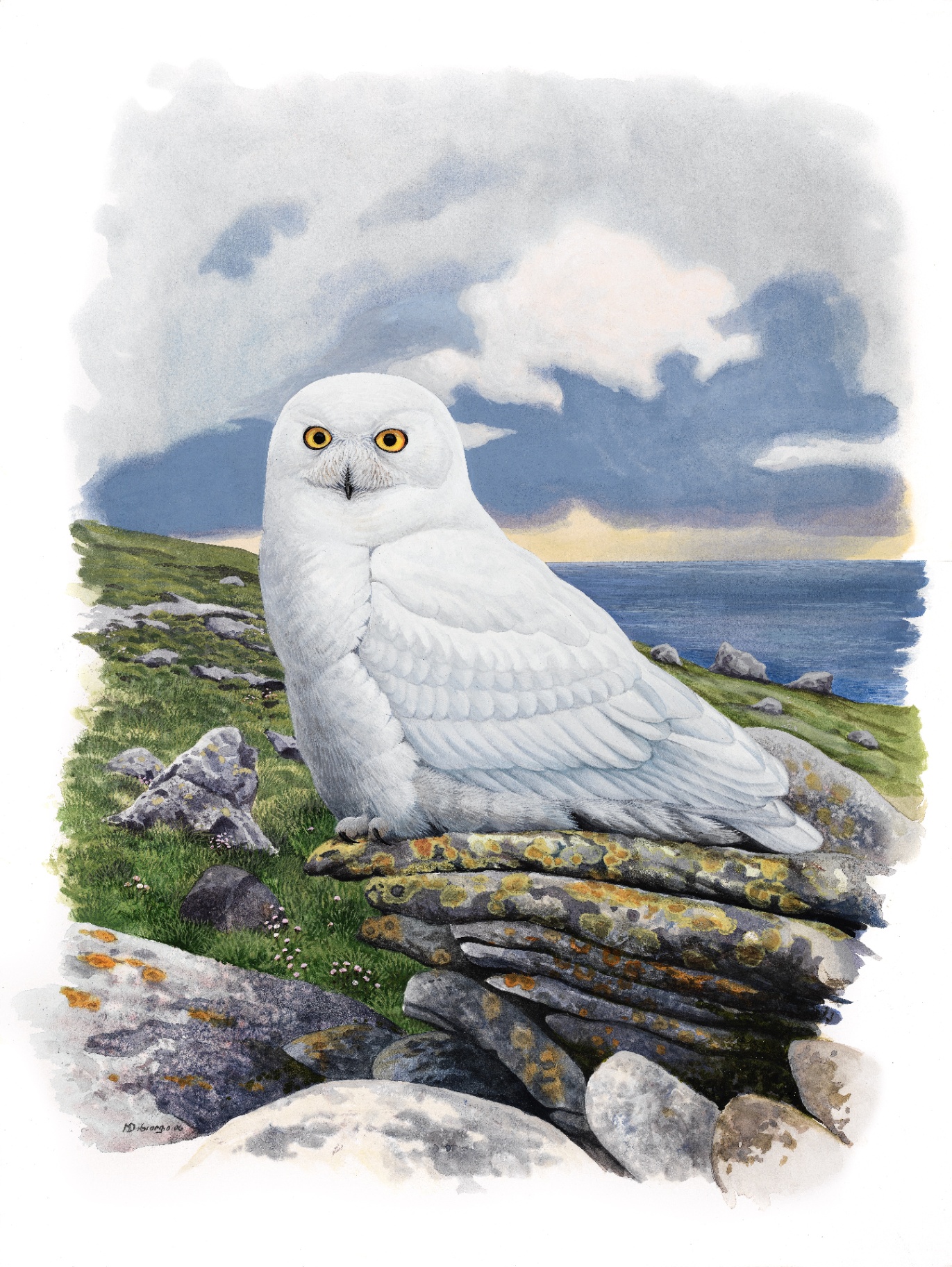
Snowy OwlBubo scandiacusMichael DiGiorgio · 200625.6 × 19.5 in · 65 × 49.5 cm 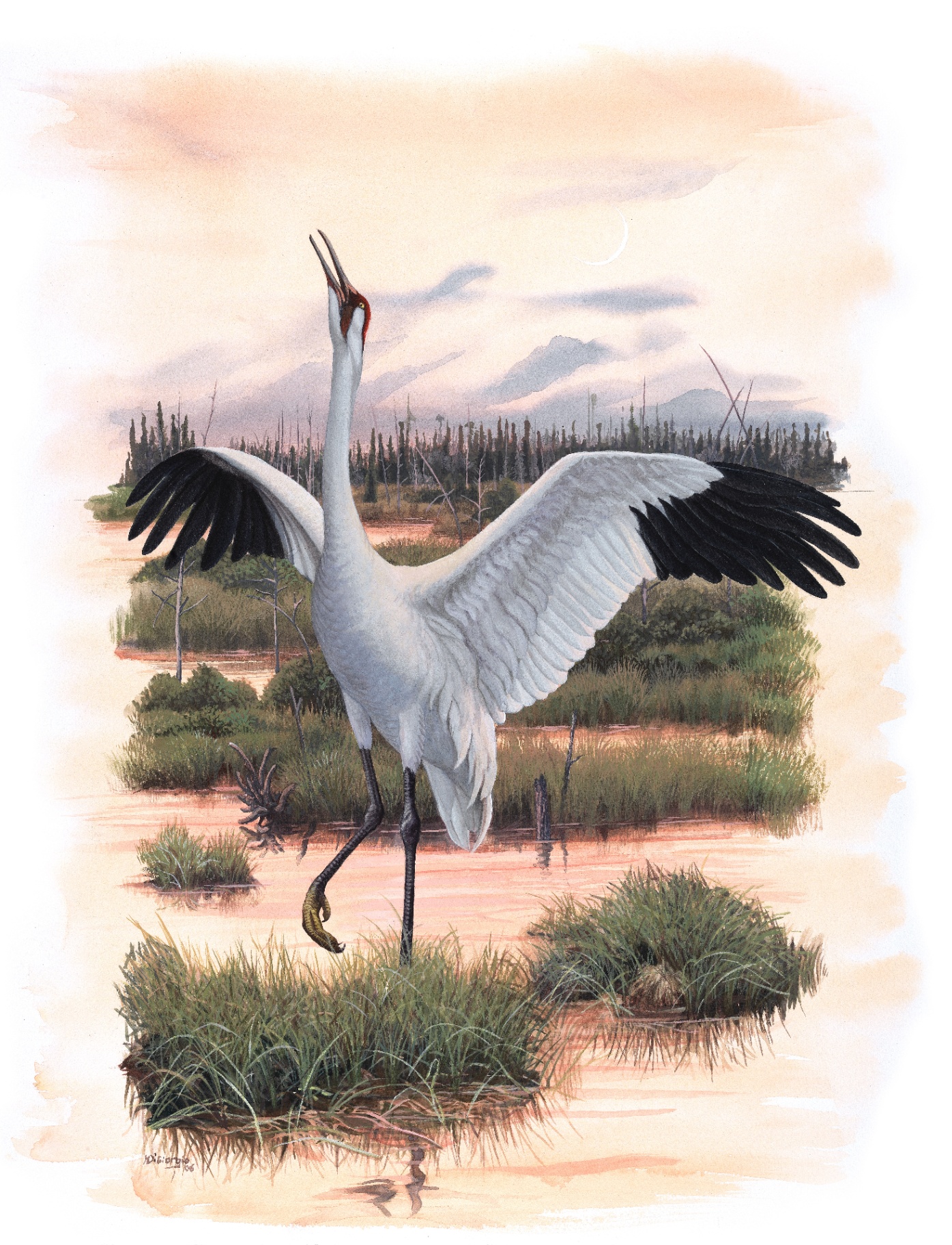
Whooping CraneGrus americanaMichael DiGiorgio · 200625.6 × 19.5 in · 65 × 49.5 cm 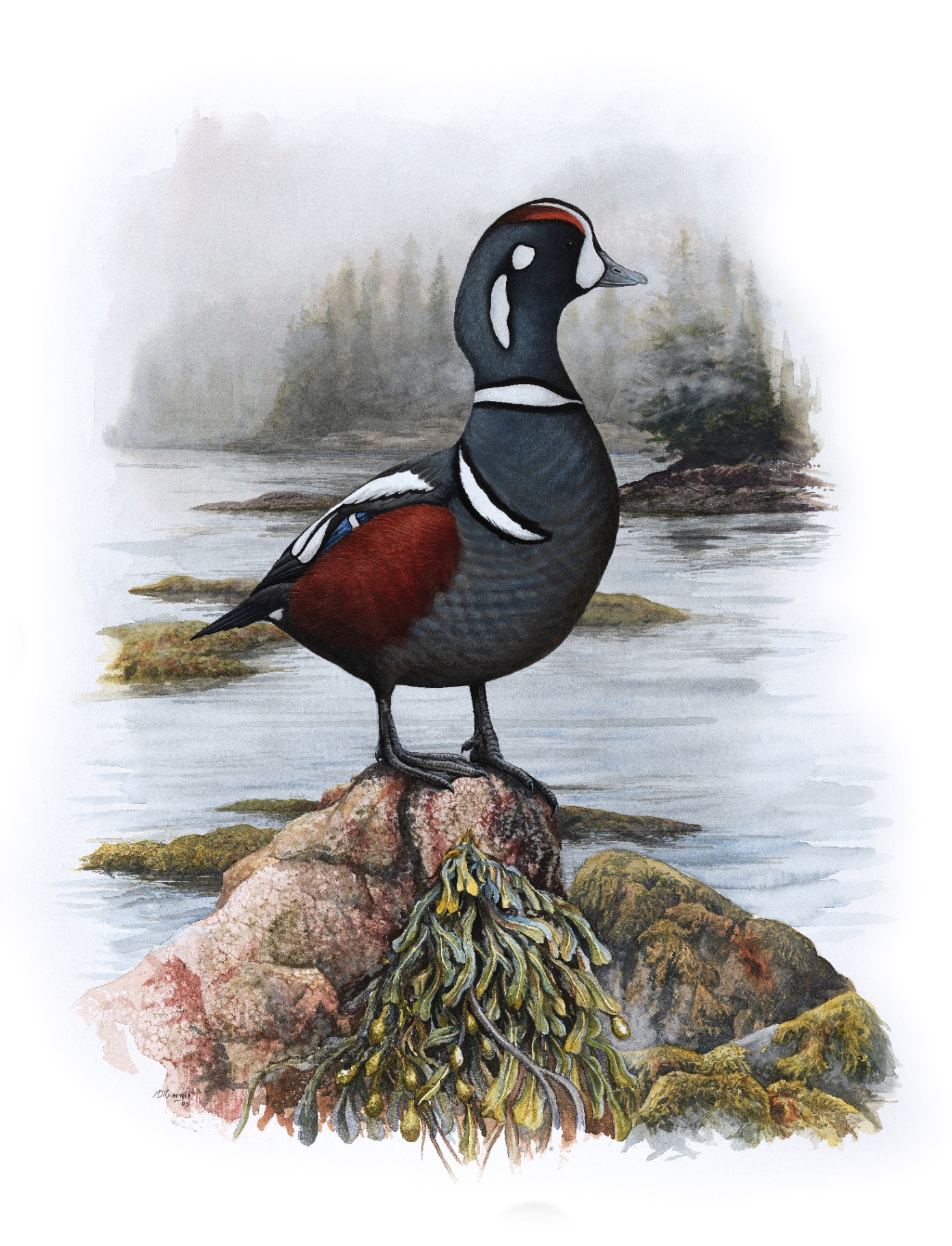
Harlequin DuckHistrionicus histrionicusMichael DiGiorgio · 200525.6 × 19.5 in · 65 × 49.5 cm
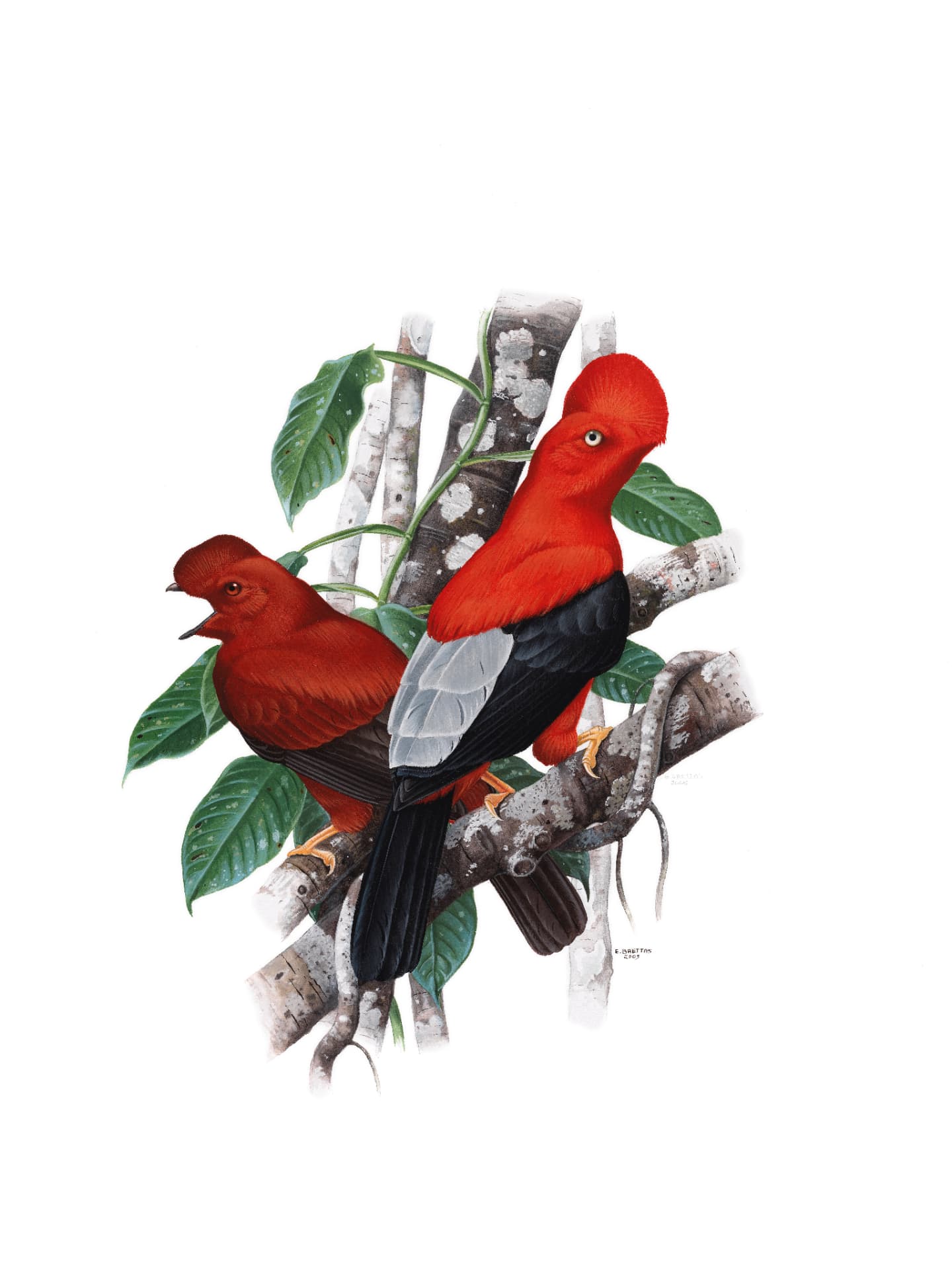
Colour and structure change with altitude. Cloud forest species such as the Andean Cock-of-the-rock, Rupicola peruvianus, occupy narrow elevational belts on humid slopes, and a change of a few hundred metres can replace one avifauna with another.
23.4 × 16.5 in · 59.4 × 42.0 cm
Shared systems, same territories.
The birds represented in the collection belong to ecosystems that connect across the hemisphere. Forest belts, mountain chains, river basins, coastlines and flyways link habitats that appear distant on a map, and migration carries individual species across several of them within a single year.
Distribution, habitat and movement are therefore continental facts, best understood across connected systems rather than region by region.